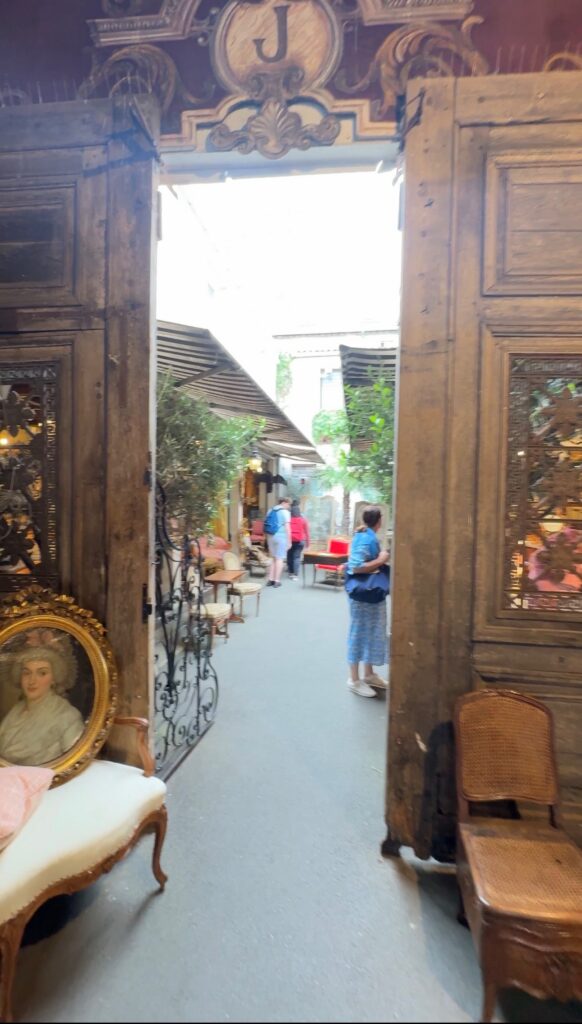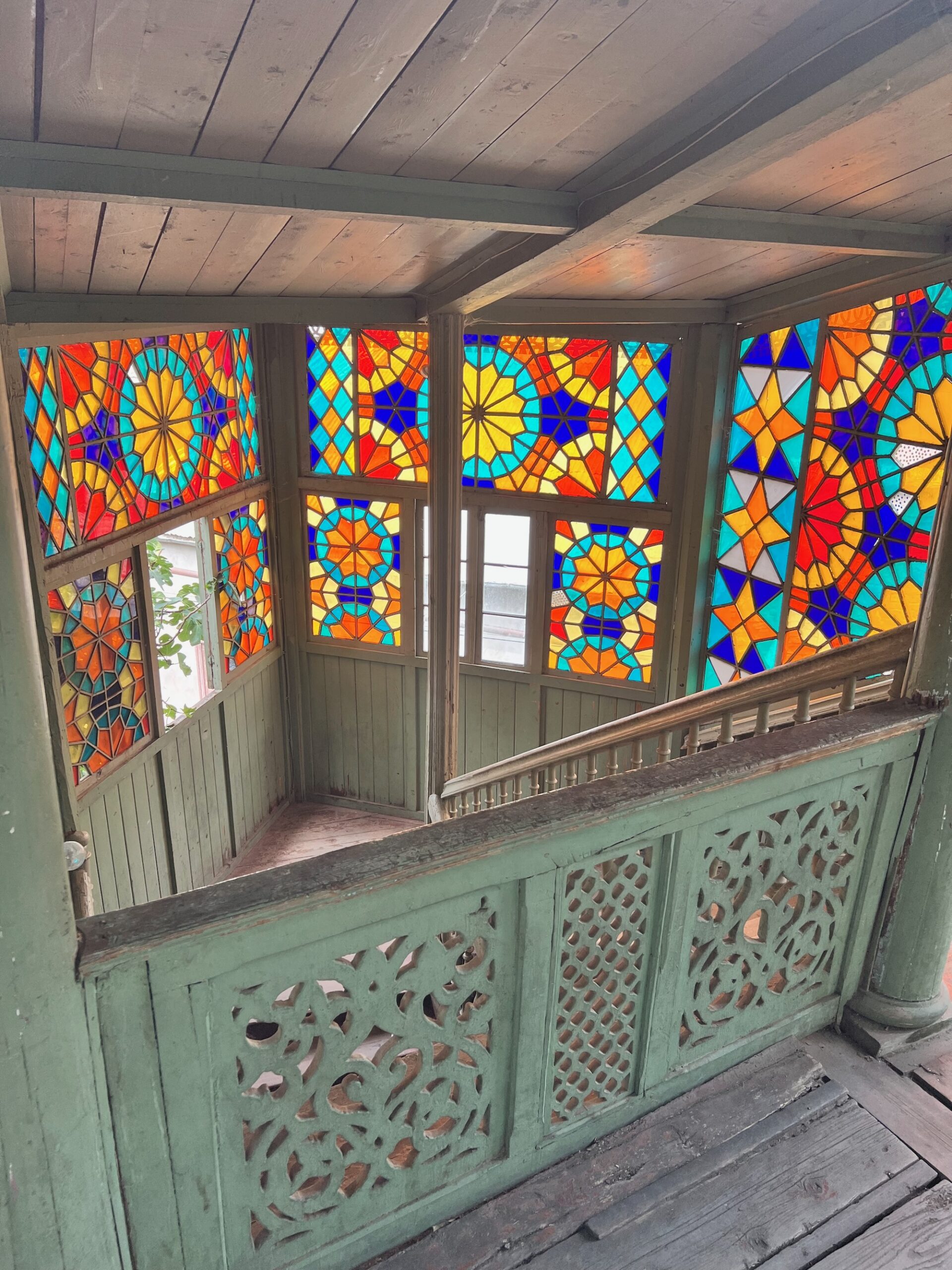
Author: Shannon

  • Tbilisi: An Introduction

    Tbilisi: An Introduction

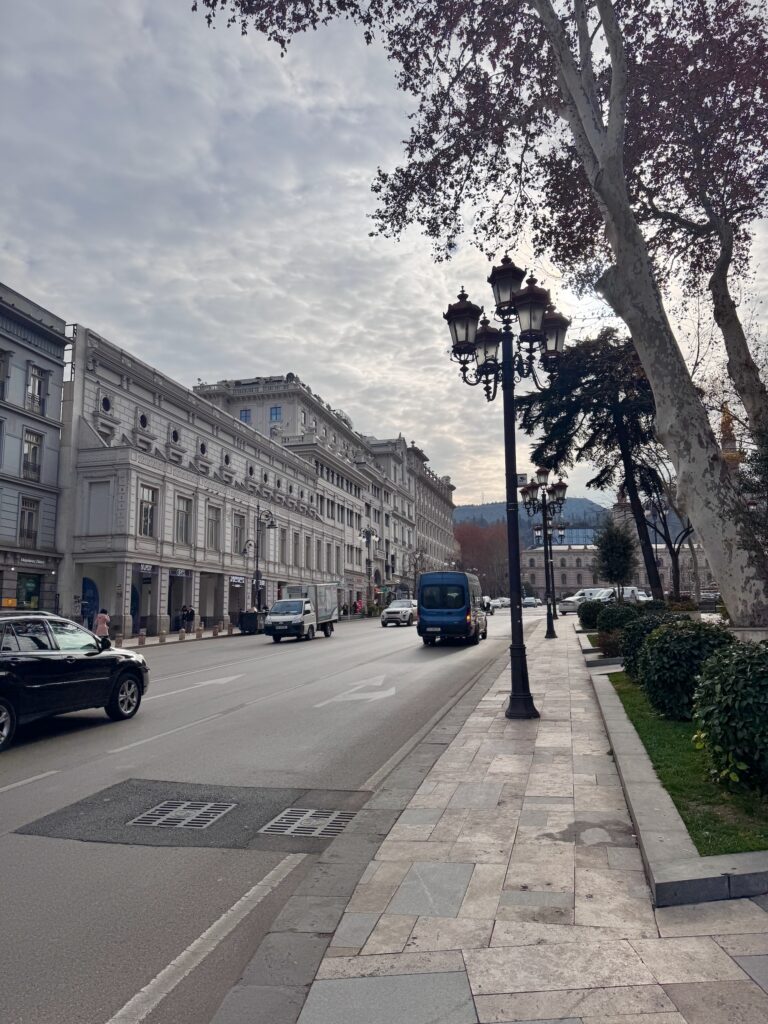
    As an American who married a Georgian Im not ashamed to admit, in the beginning, I had no idea where the Republic of Georgia was. Quickly after my first visit I became quite enthralled with the capital, Tbilisi. We have ventured back many times and that love has only grown stronger. This is my non-touristy perspective on the beautiful and fascinating city.
    TBILISI VIBES

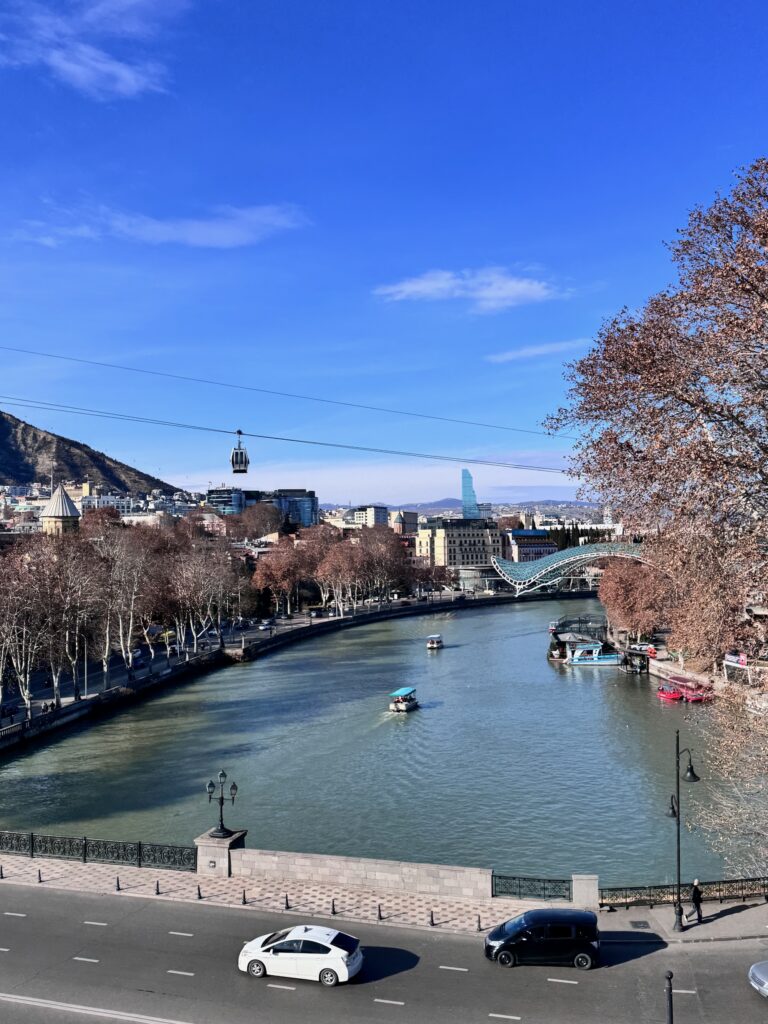
    Tbilisi is an amazing city full of beauty, history, and cultural significance. Georgians are well known for their hospitality, food, and wine. Now, as a Southern Texan, I have pretty high standards when it comes to hospitality. Visiting Tbilisi, I had to turn that expectation down slightly.

    When engaging with Georgian people, I’ve found them to be pleasant and helpful, but they aren’t necessarily smiley or outwardly cheerful—at least not in the way I was accustomed to. Their warmth tends to show itself differently. Give it a little time, and you may discover that what initially seems reserved can turn into genuine kindness and hospitality.

    If you are walking down the city streets smiling and nodding at people passing by, you may receive a cold stare in return. It is also a pretty good giveaway that you are not from Georgia.

    This is especially important to remember when visiting the markets and expecting to negotiate with vendors. As soon as they realize you are from somewhere else, they may be less inclined to be flexible with the price. In the past, my husband has actually directed me not to smile or speak when we were within earshot of a vendor so they wouldn’t charge him triple. 😂

    I learned pretty quickly that navigating Tbilisi requires a slightly different approach than I was used to. And honestly, I kind of love that about the city.

    GEORGIAN HOSPITALITY

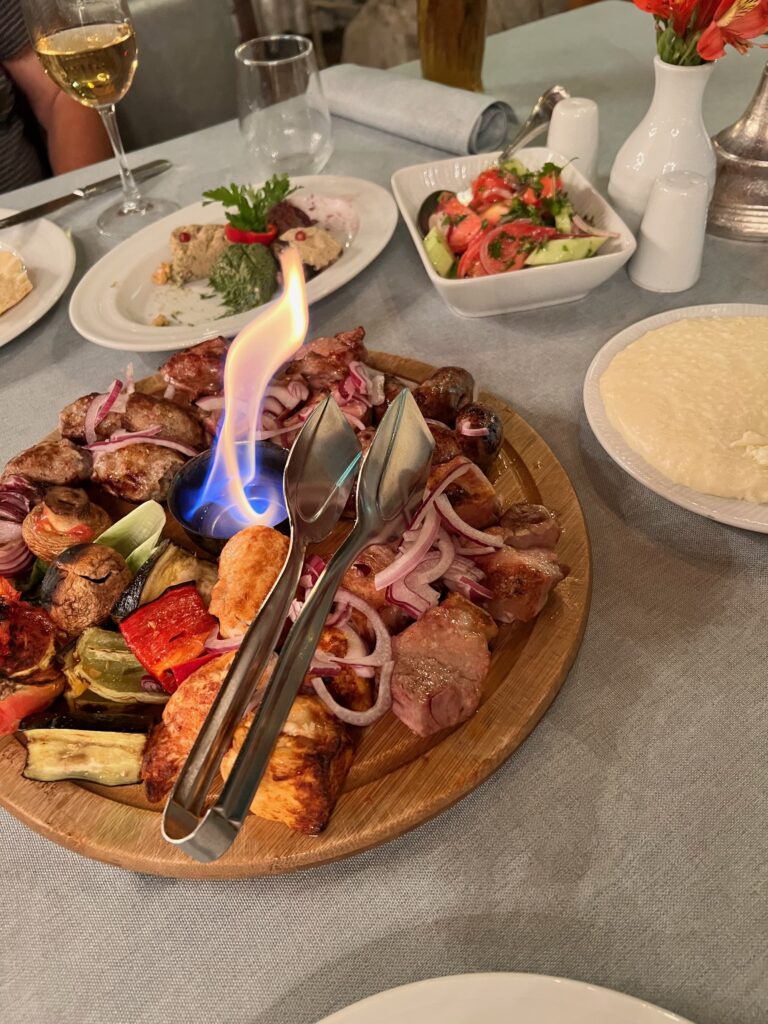
    I would say you will find true Georgian hospitality at the dinner table. Every time we visit, whether with family or extended friends, the table is always set and full of delicious, savory food. The wine glasses seem to have an eternal stream that can never quite run dry, and there is certainly no shortage of things to toast.

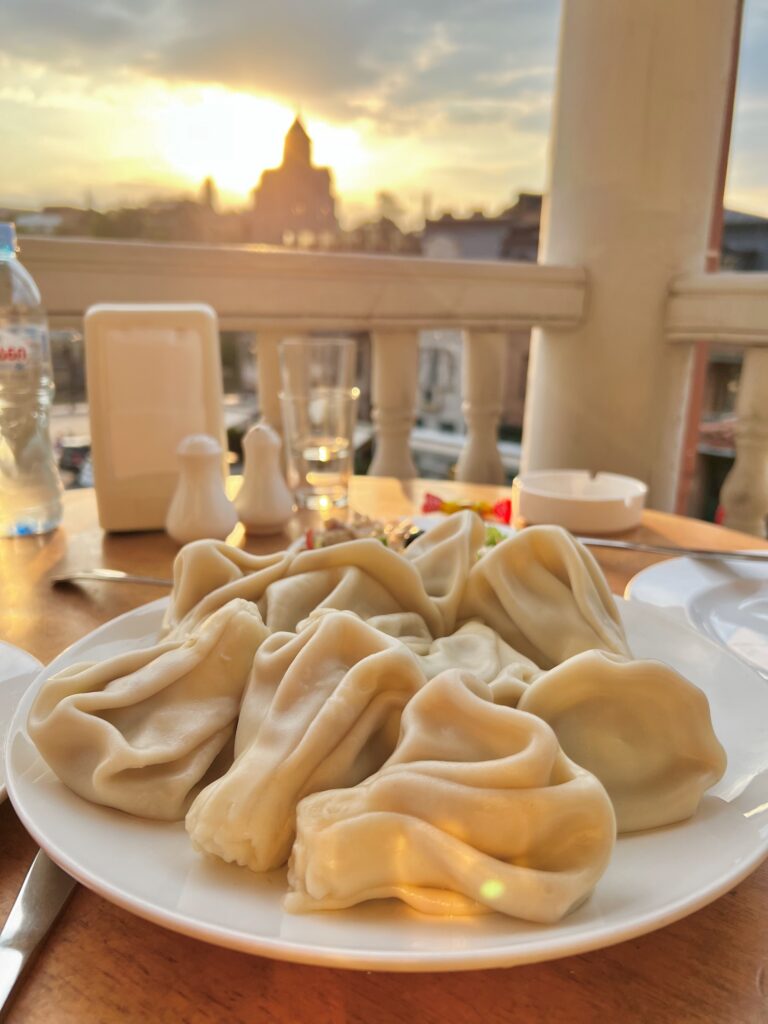
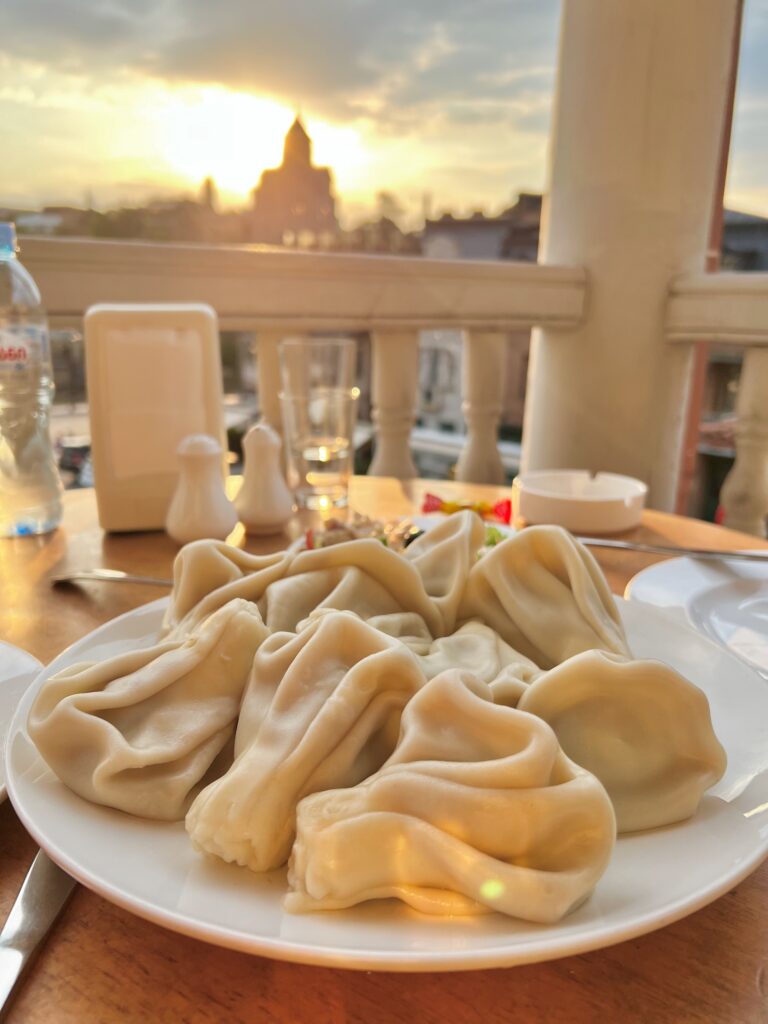
    And then there is khinkali. (heen-KAH-lee)

    Khinkali are juicy Georgian dumplings made with a variety of fillings. The dumpling is formed by rolling out extremely thin layers of dough, filling it with lamb, beef, pork, or even potato, and then gathering the dough at the top and twisting it into a little “stem.”

    There is a proper way to eat them, too. You hold the stem with your fingers or a fork, leaving the dumpling body facing upward. Take a bite from the side and carefully slurp up the delicious broth inside before eating the rest of the dumpling. Holding the dumpling upside down creates its own little bowl, helping you keep all that savory goodness where it belongs—on your plate and not all over your shirt.

    Trust me on this one.

    There are many choices to feast on at a Georgian dinner table, and I have to say my favorite, above all else, is khachapuri (hoch-ah-poor-ee). This heavenly cheese bread is made in many different ways, mostly depending on the region of Georgia.

    The Adjaruli khachapuri is the best, IMO. Its close second is the Imeruli version made by my sister-in-law, Tamuna. The Adjaruli version arrives looking like a large bread boat, filled with Georgian cheeses and baked to golden perfection. Before serving, a raw egg is added to the top. Once the bread reaches your table, you take a fork and spin the egg into the melted cheese, incorporating it into all that gooey, cheesy goodness.

    It is basically a boat full of melted cheese, bread, butter, and egg. What’s not to love?

    The Imeruli version Tamuna makes is her favorite because it comes from the region her family is from. Imeruli khachapuri differs from the Adjaruli version mostly in presentation. The cheese is layered inside the dough, and in its final form, the khachapuri is round, almost like a small pizza, with the cheese baked inside and a light golden crispness on top.

    This version is less juicy, but it is also much easier to take with you on the go.

    When I sit at Tamuna’s table, I am greeted with warm, soft, crispy cheese bread, delicious kebabs, Georgian cucumber and tomato salad, eggs, cheese, sausage, plenty of wine, and so much more. You will never leave a Georgian home hungry. That’s guaranteed!

    MOVING AROUND TBILISI

    So, I have a personal advantage when navigating my way through Tbilisi: my husband becomes my tour guide. I tell him where I want to go, and he gets us there. That means I don’t have to put much effort into thinking about how to get around. 😂

    His biggest advantage, though, is the language. While you will find plenty of younger Georgians who speak some English, you may have a harder time finding older generations who can comfortably converse with you.

    Thankfully, getting around Tbilisi is pretty easy. Download the Bolt app—it’s essentially the European version of Uber. Put in your destination, and a driver will come to your designated meeting point, pick you up, and take you where you need to go. There isn’t much need for conversation, but I would still suggest politely saying hello—gamarjoba—and thanking your driver with madloba at the end of the ride.

    And if you happen to be traveling with a Georgian husband who can handle the directions and the language? Even better. 😉

    Tbilisi itself is pretty spread out, and I don’t find it highly walkable if you’re trying to squeeze in a lot of sights in one day. My advice is to pick a micro area of the city, use Bolt, or take the metro as close as possible and then walk and explore that specific area. Please note that many places have hilly areas. You can go from a pleasant stroll to “why did I think this was a good idea?” pretty quickly. Always wear comfortable shoes!

    I find the Tbilisi Metro easier to use than the one in NYC. Obviously, there are fewer lines running, but the Tbilisi Metro just seems more straightforward. I will say, upon my first ride, I found myself quite shocked at how far down you have to take the escalator to reach the platform!

    There are other methods for traversing the capital city, but I generally don’t use them myself. You can look into bus routes or car rentals. I will say that renting a car for the city would be a very brave choice for a tourist. LOL.

    MY FAVORITE TBILISI SPOT

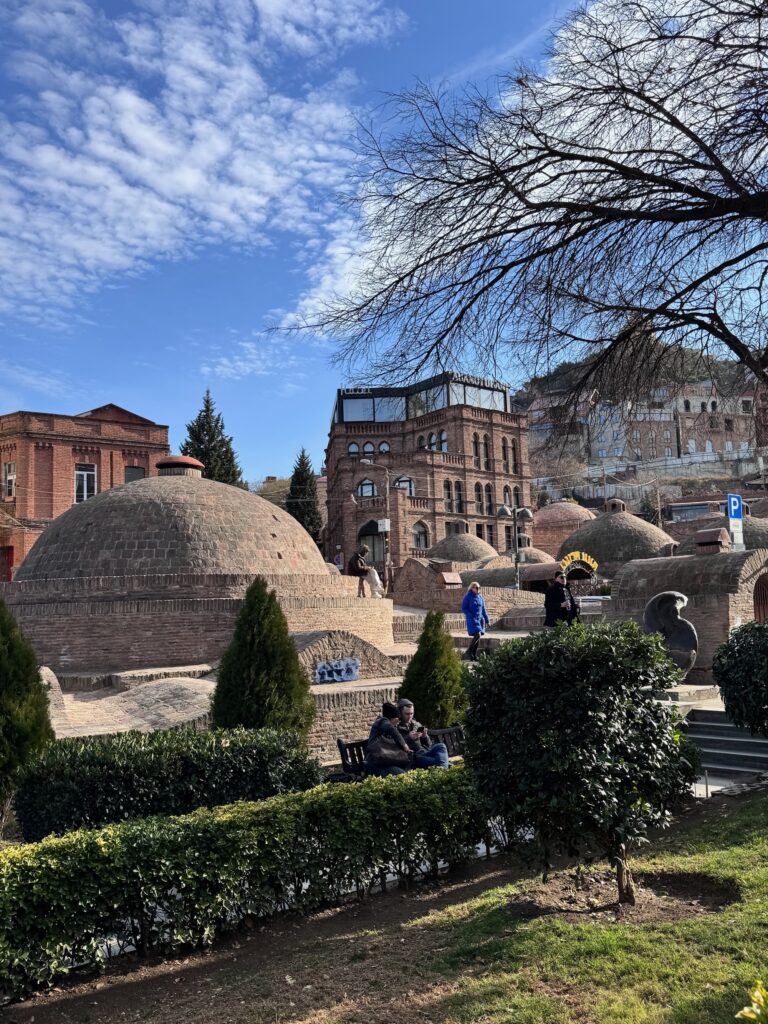
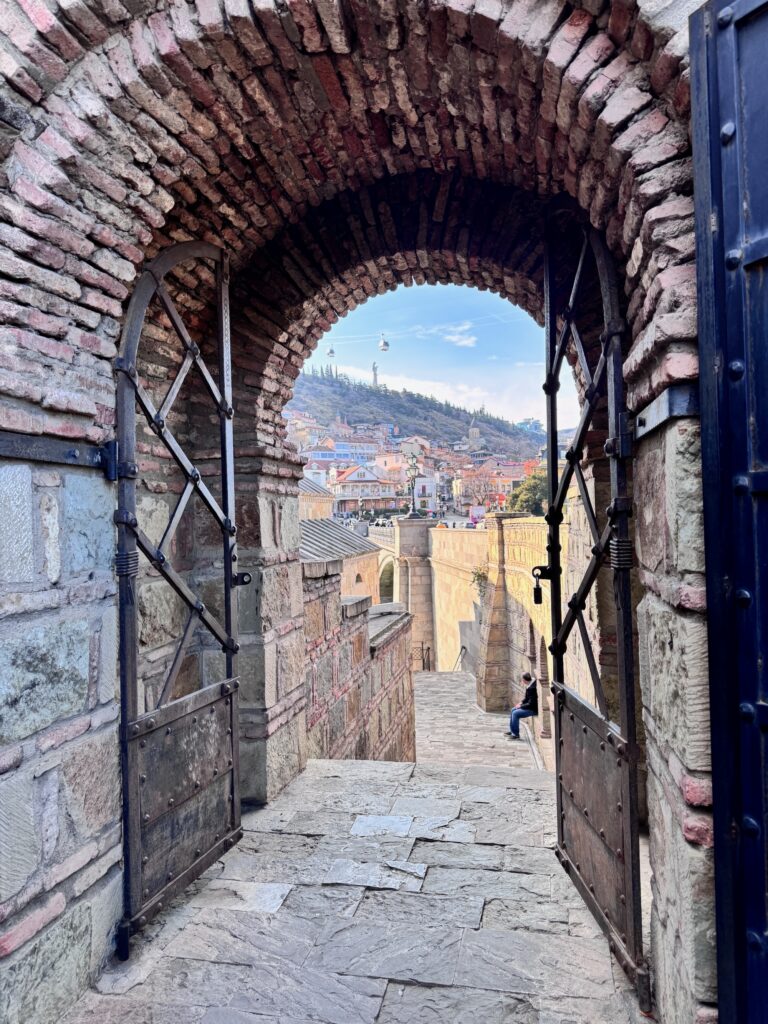
    While Tbilisi has plenty of beautiful places to explore, the place I find myself returning to most is Old Town Tbilisi.

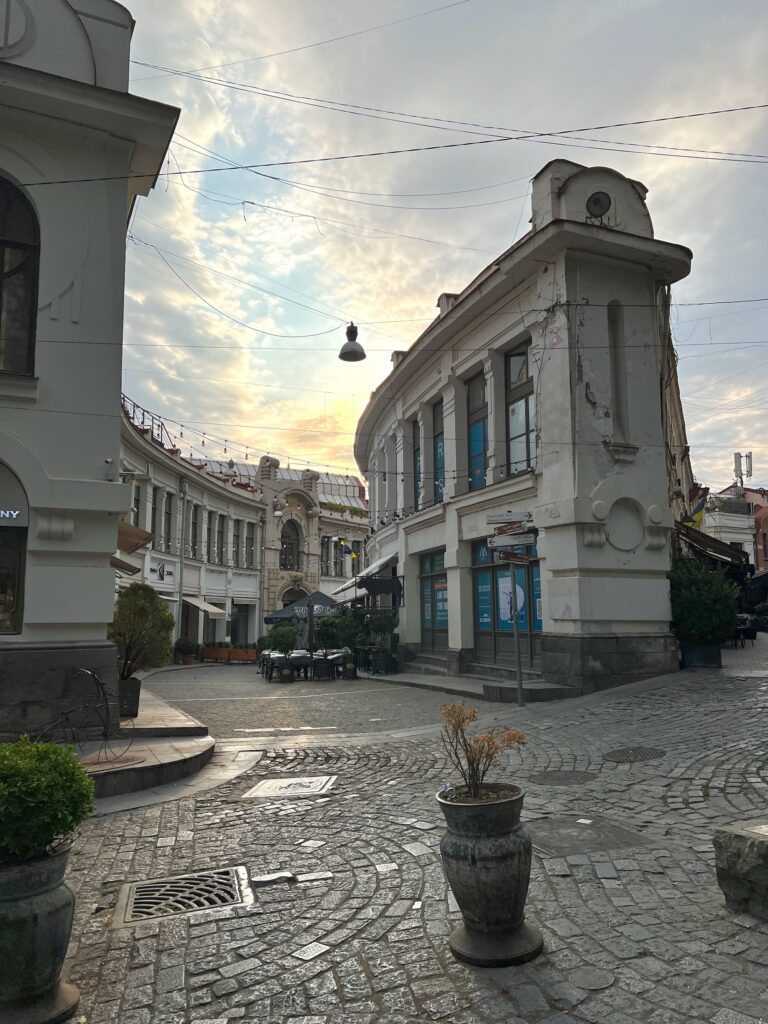
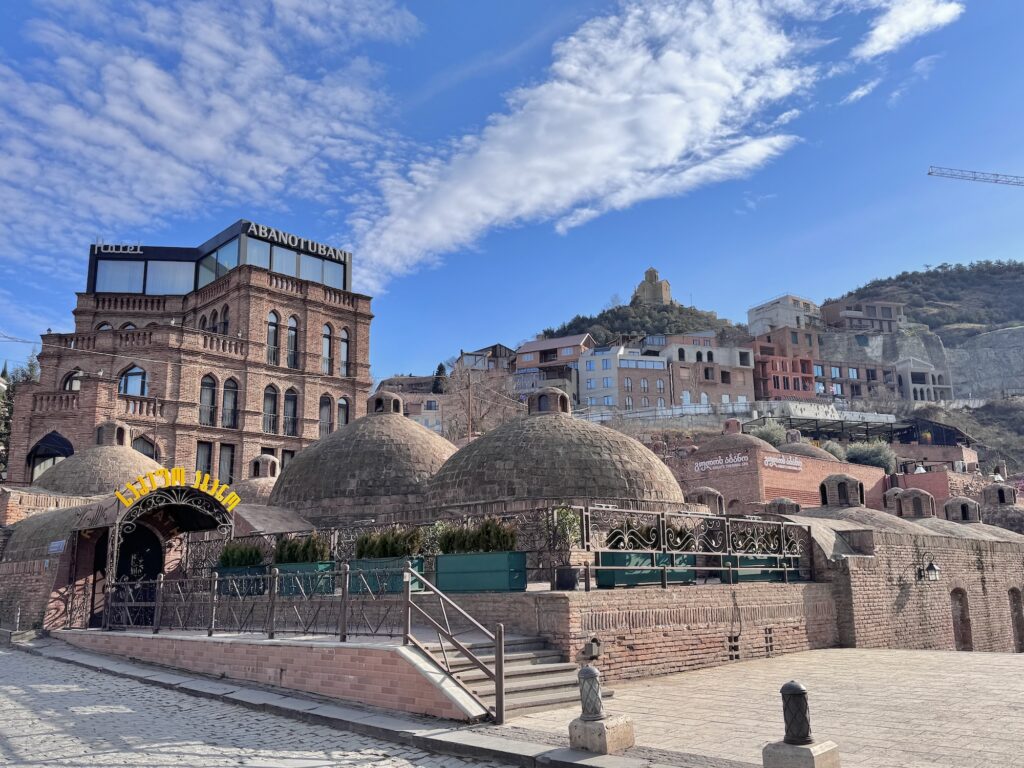
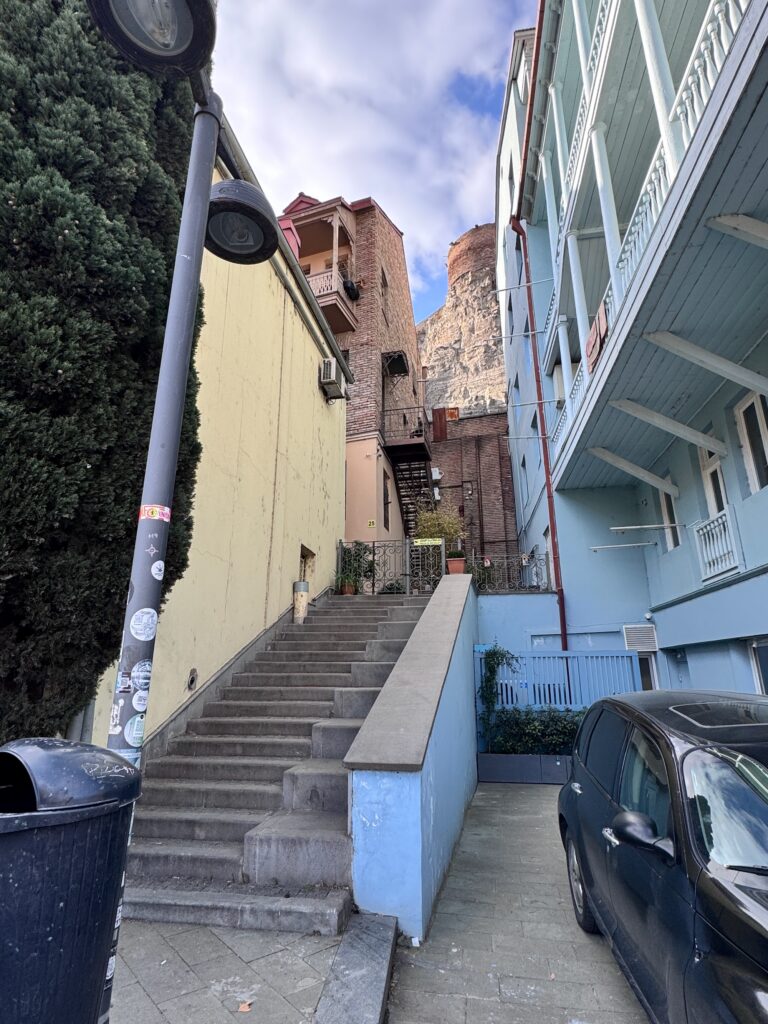
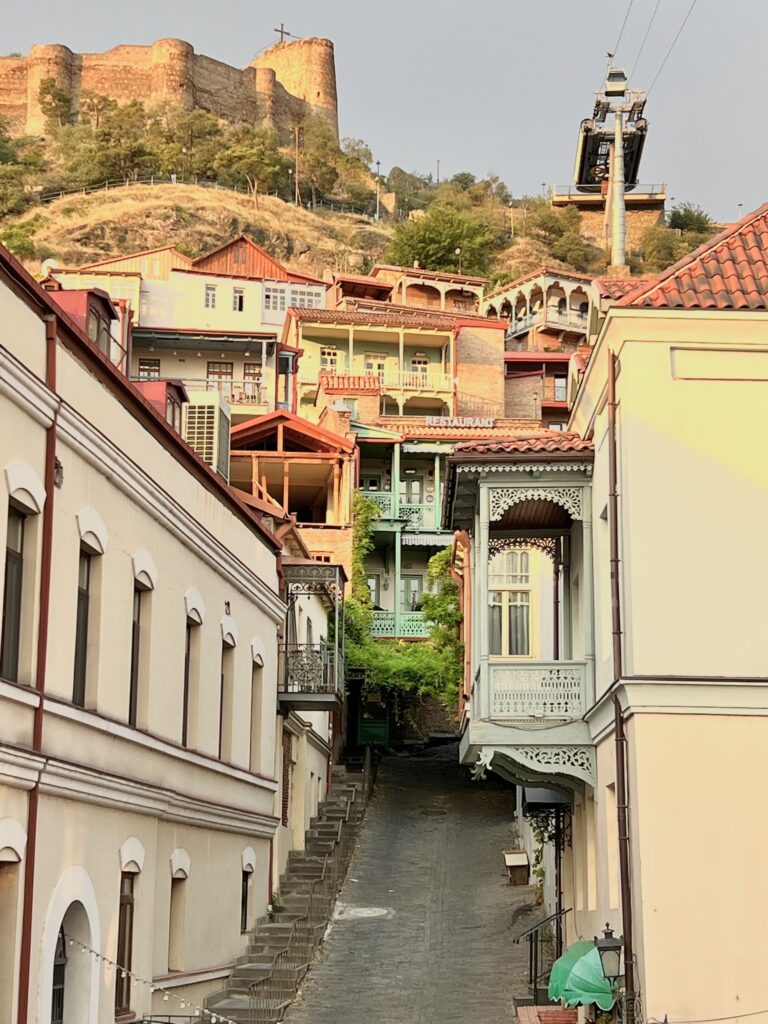
    I love wandering the cobblestone streets, where the old and new seem to collide around every corner. The streets wind up the hills toward Narikala Fortress, which sits high above the Mtkvari River, offering breathtaking views across the city. The fortress dates back to the 4th century and has watched over Tbilisi through centuries of change.

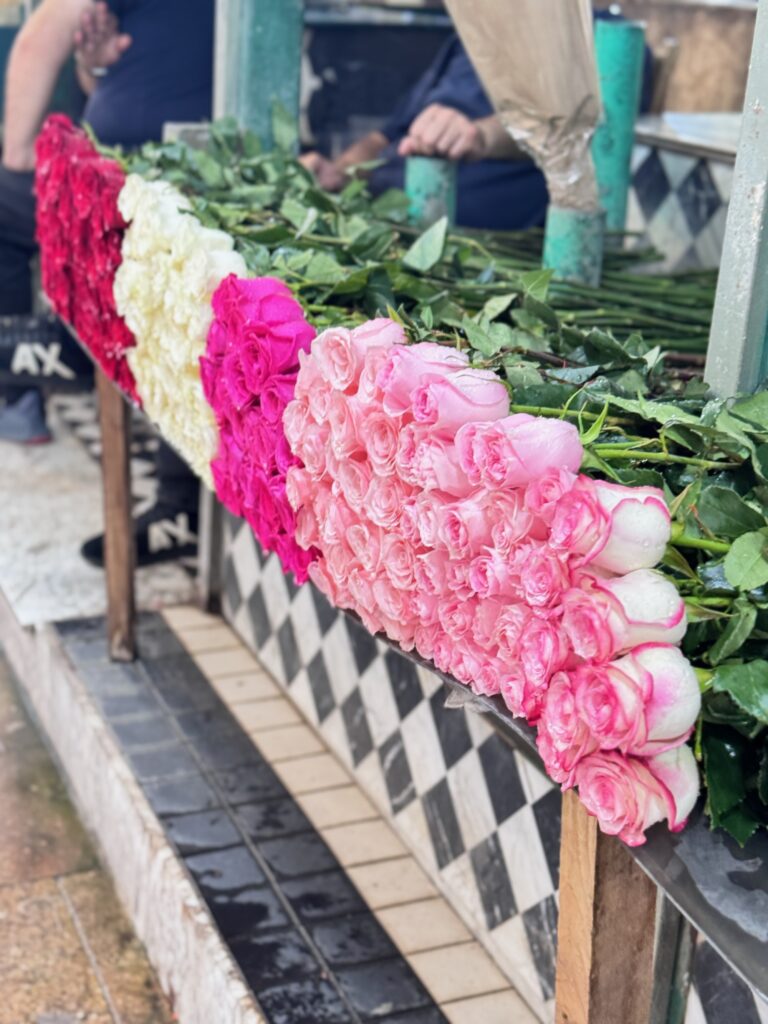
    I find the contrast between the brightly colored, weathered homes and the modern residential buildings so intriguing. It feels like the old city is constantly meeting the new one.

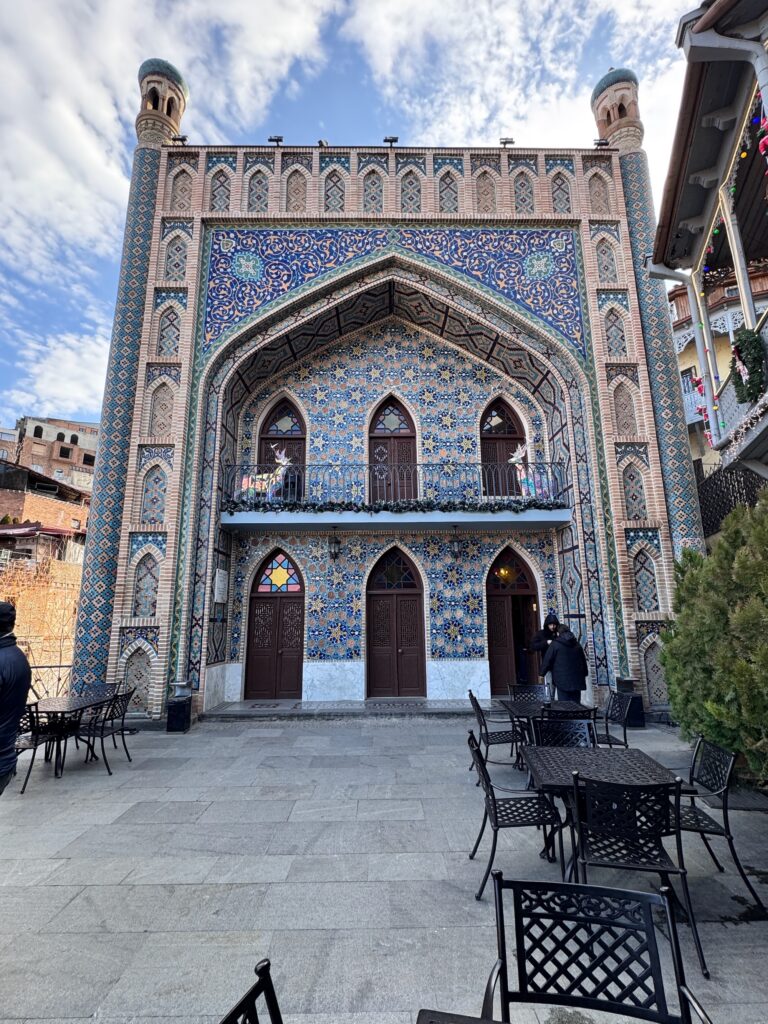
    Old Town is also home to Tbilisi’s famous sulfur baths. I have not experienced a kisi yet, but it is definitely on the list for our next visit. A kisi is an invigorating exfoliating scrub and wash performed at the baths. I have been told it is quite an experience—and I intend to find out for myself!


    Quick takeaway:

    Tbilisi is a city that doesn’t reveal itself all at once. It’s a little chaotic, a little romantic, wonderfully old, and constantly changing. The best way to understand is to wander its streets, linger over a long meal, listen to the language around you, and let the city unfold at its own pace.

    Forward Always, Shannon

    If this is your fist time here, welcome to Forward & Fernweh. Explore more travel stories, destination guides, and honest reviews, or visit my About Page to learn more about the journey behind the blog.


  • Not THAT Georgia!

    Not THAT Georgia!

    There is another Georgia that most Americans aren’t very familiar with. THIS Georgia is a small country at the crossroads of Europe and Asia, nestled in the Caucasus. The Republic of Georgia has my heart, because it is my husband’s home country.

    SO, WHERE EXACTLY IS GEORGIA?

    If you’re anything like I was before I really got to know the country, you might have a vague idea that Georgia is somewhere over there — perhaps near Russia, perhaps somewhere in Eastern Europe.

    And honestly, that’s part of what makes Georgia so fascinating.

    Its location has shaped nearly everything about it.

    Georgia sits at a crossroads between cultures, religions, empires and trade routes. For centuries, people have passed through this small piece of the Caucasus, leaving their influence behind while Georgians fiercely maintained their own identity.

    You can see that history everywhere.

    There are ancient churches and monasteries, medieval fortresses, cave cities, Soviet-era buildings and modern cafés and wine bars — all existing within the same country.

    And then there is Tbilisi.

    TBILISI: WHERE I WANT TO BEGIN

    Tbilisi is Georgia’s capital and has served as its cultural, political and economic center for roughly fifteen centuries. The city sits along the Mtkvari River, surrounded by hills and mountains.

    The name Tbilisi comes from the Georgian word “tbili,” meaning “warm,” referring to the natural hot sulfur springs around which the city developed.

    And this is very Tbilisi.

    History here isn’t something you simply read about. It’s woven into the streets.

    Walk through Old Tbilisi and you’ll find narrow lanes, colorful wooden balconies, churches, sulfur baths and courtyards. Look a little farther and you’ll find Soviet architecture, contemporary restaurants, wine bars, art spaces and a nightlife scene that feels surprisingly modern.

    The city is old.

    But it doesn’t feel stuck in the past.

    A COUNTRY WITH AN EXTRAORDINARY HISTORY

    Georgia’s history goes back thousands of years. The region was home to ancient kingdoms including Colchis and Kartli-Iberia, and its position between major powers meant that Georgia spent much of its history defending its independence and identity.

    Georgia adopted Christianity as a state religion in the fourth century, making it one of the world’s oldest Christian countries.

    Centuries later came what Georgians often regard as their Golden Age, followed by invasions and periods of domination by larger empires.

    Georgia eventually became part of the Russian Empire, briefly regained independence as the Democratic Republic of Georgia in 1918, and was incorporated into the Soviet Union in the early 1920s.

    After decades of Soviet rule, Georgia declared independence again in 1991.

    That history is important when you visit.

    Because Georgia doesn’t simply feel like a country that happens to be located between Europe and Asia.

    It feels like a country that has spent centuries determined to remain Georgia.

    WINE IS NOT JUST SOMETHING GEORGIANS DRINK

    Okay, we need to talk about wine.

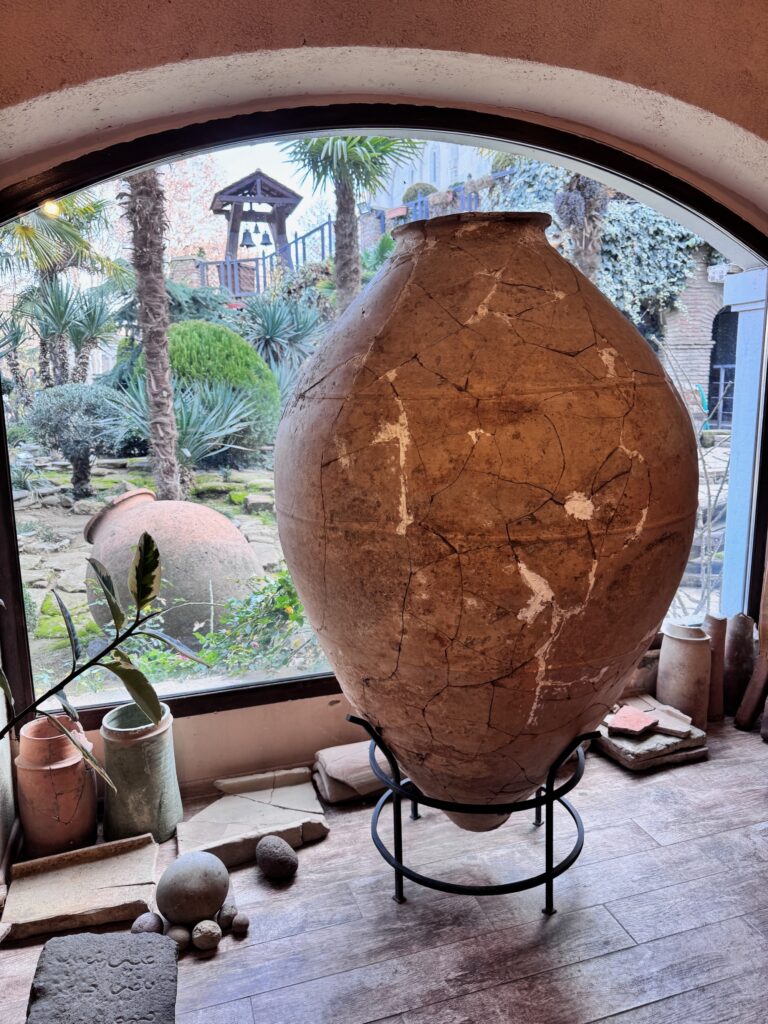
    Georgia has one of the world’s oldest continuous winemaking traditions. The traditional qvevri method involves making and storing wine in large clay vessels, traditionally buried in the ground.

    UNESCO has recognized the traditional Georgian qvevri winemaking method as Intangible Cultural Heritage.

    Wine isn’t simply a tourist attraction here.

    It is woven into Georgian culture, food, family gatherings and hospitality.

    And hospitality might be the word that best explains Georgia to someone who has never been.

    COME HUNGRY

    Georgian food deserves its own post — which, don’t worry, it will get.

    There is khachapuri, the famous cheese-filled bread; khinkali, those wonderfully messy soup dumplings; walnuts, herbs, eggplant, beans, grilled meats and an endless parade of dishes meant to be shared around a table.

    But Georgian dining isn’t really about ordering an entrée and eating it yourself.

    Meals are communal.

    Tables fill up.

    Wine gets poured.

    Someone makes a toast.

    Then another toast.

    And another.

    Suddenly, what you thought would be a quick dinner has turned into an entire evening.

    That is Georgia.

    AND THEN THERE’S THE LANGUAGE

    One of the first things you’ll notice in Georgia is the alphabet.

    It looks completely unfamiliar — and that’s because it is.

    Georgia has its own distinctive writing tradition, and UNESCO recognizes the living culture of three Georgian writing systems.

    Even after spending time around Georgian speakers, I still find myself fascinated by the letters.

    They look almost like little works of art.

    And then you hear the language spoken.

    Georgian has a sound and rhythm all its own, and the country’s musical traditions are equally distinctive. Georgian polyphonic singing has been recognized by UNESCO as Intangible Cultural Heritage.

    WHY GEORGIA?

    I could give you a list of reasons to visit Georgia.

    I could tell you about the mountains, the Black Sea, the ancient monasteries, the wine, the food, the architecture and the incredibly affordable cost of traveling here.

    And I will.

    That’s what this little corner of Forward & Fernweh is going to be about.

    But the real reason Georgia is going to have a place here is much simpler.

    My husband is Georgian.

    I’ve been lucky enough to see this country not just as a visitor, but through the eyes of someone who calls it home.

    I’ve eaten at tables with his family. I’ve wandered streets that have meaning to him. I’ve returned more than once, and every time I discover something I didn’t see before.

    So I’m not going to pretend I’m an objective observer.

    I’m already a little bit in love with Georgia.

    And maybe that’s the best way to introduce you to a place.

    This is Georgia.

    Not the one in the American South.

    The other one.

    And I have a feeling you’re going to want to know her.

    A LITTLE TASTE OF GEORGIA

    Tbilisi is just the beginning. There is so much more to discover in Georgia-from ancient wine traditions and incredible food to its mountains, monasteries, seaside towns and unforgettable hospitality. I hope you will follow along as I share the Georgia Ive come to know and love.

    Forward Always, Shannon

    If this is your first time here, welcome to Forward & Fernweh. Explore more travel stories, destination guides, and honest reviews, or visit my About Page to learn more about the journey behind the blog.
  • Fort Lauderdale Water Taxi: The Best Way to See the City From the Water

    Fort Lauderdale Water Taxi: The Best Way to See the City From the Water

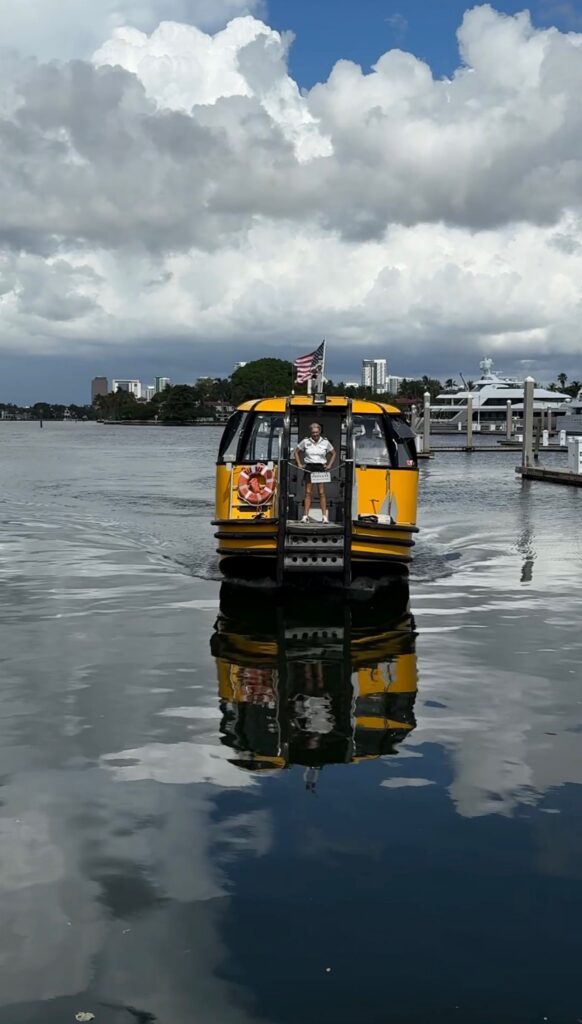
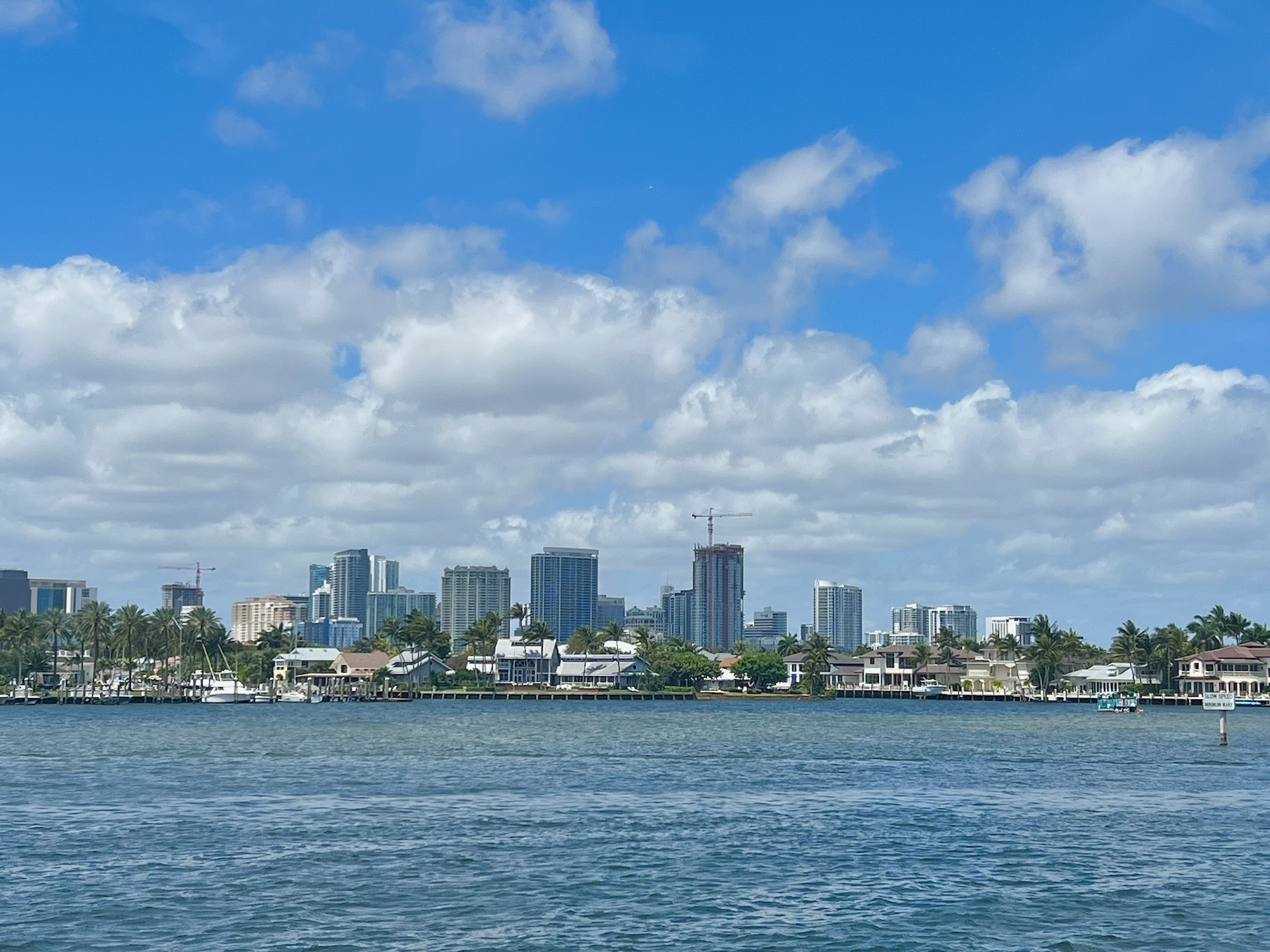
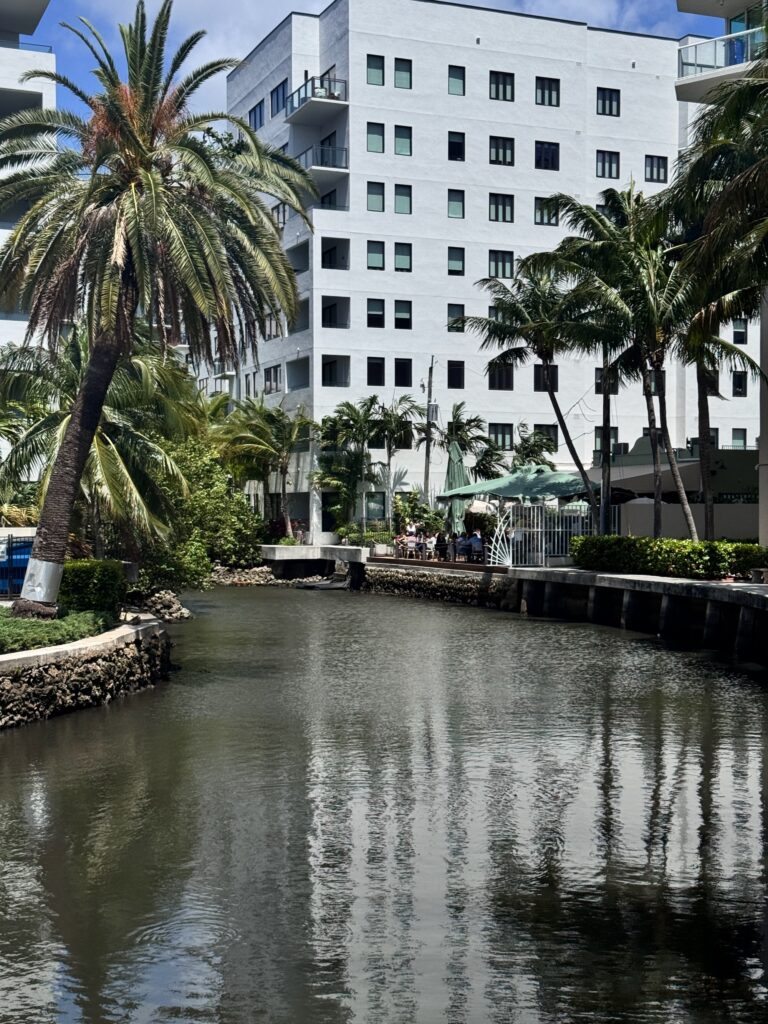
    Fort Lauderdale has earned its nickname, the “Venice of America,” for good reason. With miles of waterways winding through the city, enormous yachts parked alongside waterfront restaurants, beautiful homes lining the Intracoastal, and the Atlantic just beyond it all, this is a city that really should be experienced from the water.

    And one of the easiest—and most fun—ways to do that is the Fort Lauderdale Water Taxi.

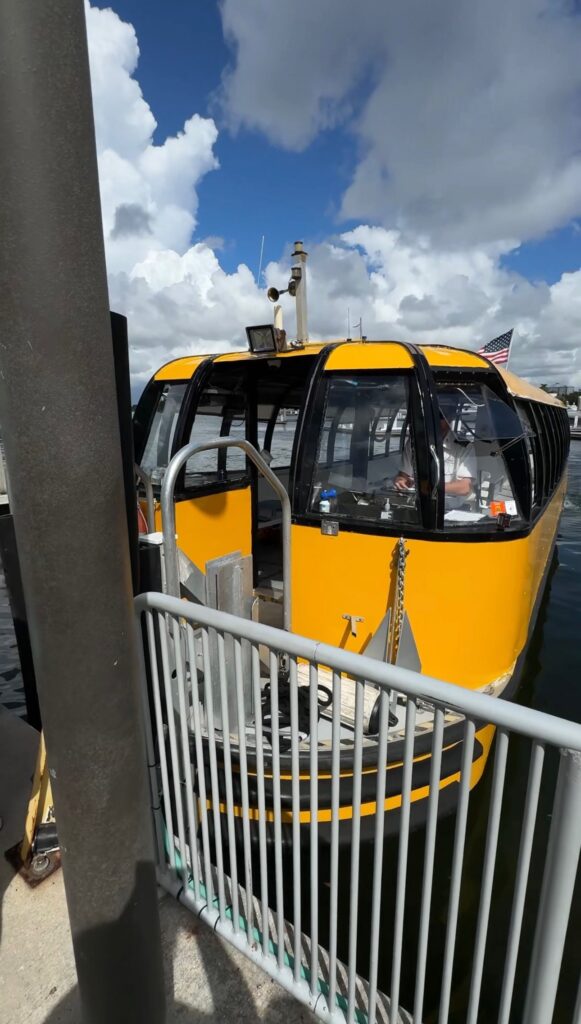
    The Water Taxi is a hop-on, hop-off boat service that operates throughout Fort Lauderdale and connects visitors with restaurants, shopping, beaches, hotels, parks, and other waterfront destinations. The boats also offer narrated sightseeing along the way, so the ride itself becomes part of the experience. (Water Taxi)

    How Does the Fort Lauderdale Water Taxi Work?

    It’s pretty simple.

    Purchase an all-day pass, head to any Water Taxi stop, and hop aboard. You can get off wherever you’d like, explore for as long as you want, and then catch another boat when you’re ready to continue.

    Fort Lauderdale service currently operates seven days a week from 10 a.m. to 10 p.m., with boats generally departing every 35–45 minutes. There’s also a live boat tracker, which I highly recommend using so you’re not standing at a dock wondering where your boat is. (Water Taxi)

    And unlike a traditional taxi, you’re not paying for each individual ride. The all-day pass allows you to board as often as you like during operating hours. (Water Taxi)

    Screenshot

    What Will You See?

    This is where the Water Taxi gets really good.

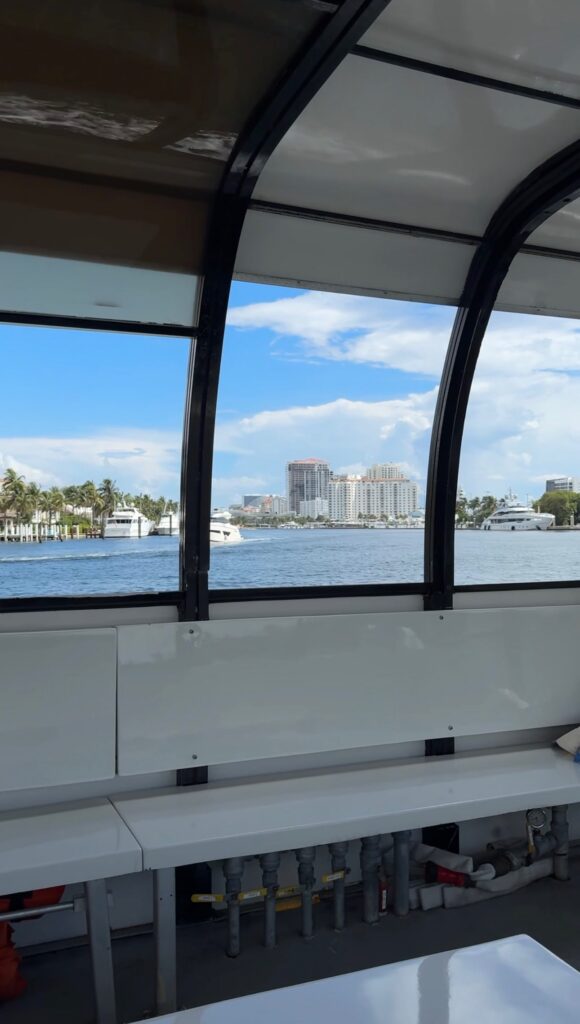
    Instead of sitting in traffic, you’re cruising along Fort Lauderdale’s waterways, passing waterfront mansions, marinas, mega-yachts, restaurants, bridges, and some of the city’s most beautiful neighborhoods.

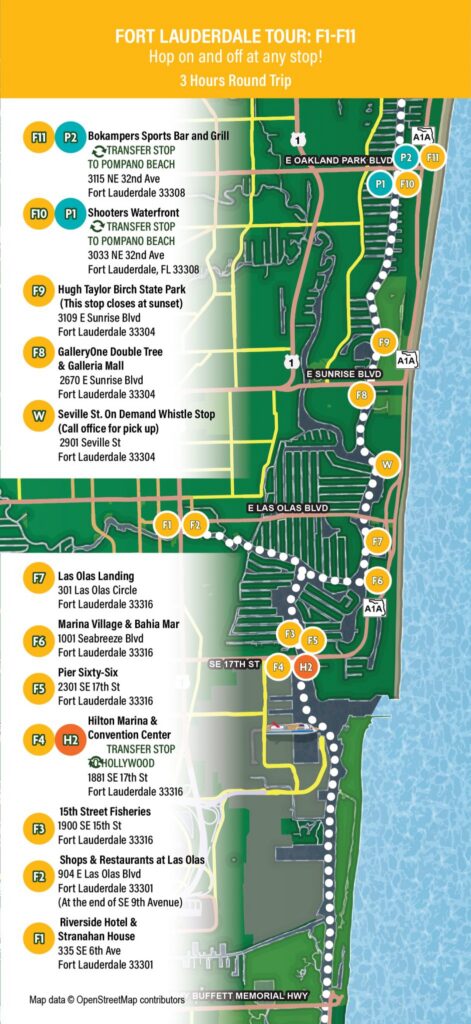
    The Fort Lauderdale route currently includes 10 primary stops, stretching from downtown to the northern part of the city. (Water Taxi)

    Some of the stops I’d pay particular attention to include:

    Riverside Hotel & Stranahan House

    This is a great starting point for exploring downtown Fort Lauderdale, the Riverwalk, and Las Olas.

    Shops & Restaurants at Las Olas

    If you’re looking for shopping, restaurants, cocktails, and people-watching, this is an easy stop to build into your day.

    15th Street Fisheries

    A particularly fun stop for lunch. It’s a waterfront restaurant and marina where you can enjoy a meal and even watch the tarpon and other fish around the docks.

    Hilton Marina & Convention Center

    This is a major transfer point and connects the Fort Lauderdale route with the Hollywood route.

    Bahia Mar & Fort Lauderdale Beach

    If you want to combine your Water Taxi experience with a beach day, this is one of the stops to know.

    Hugh Taylor Birch State Park

    This is a wonderful option if you’d like to escape the buildings and boats for a little while and explore one of Fort Lauderdale’s beautiful green spaces. Just remember that this particular stop closes at sunset. (Water Taxi)

    Shooters Waterfront

    At the northern end of the Fort Lauderdale route, Shooters is another popular waterfront restaurant—and a transfer point for continuing toward Pompano Beach. (Water Taxi)

    You Can Even Take It to Hollywood

    One of my favorite things about the Water Taxi system is that your day doesn’t necessarily have to stay within Fort Lauderdale.

    The all-day pass includes the Hollywood route, with service between Fort Lauderdale’s Hilton Marina and Margaritaville Hollywood Beach Resort. (Water Taxi)

    So you could spend the morning exploring Fort Lauderdale, hop on the boat toward Hollywood, spend some time on the beach or Broadwalk, and then return by water.

    That’s a pretty fantastic way to turn transportation into part of your vacation.

    And Then There’s Pompano Beach

    The Water Taxi network also extends north into Pompano Beach and Lauderdale-by-the-Sea.

    The Pompano route has stops at places including Lauderdale-by-the-Sea, Pompano Beach’s waterfront parks, the pier, restaurants, and Lighthouse Point. The route offers unlimited rides from 10 a.m. to 10 p.m. with its own pass. (Water Taxi)

    So if you’re staying in the Fort Lauderdale area for several days, it’s worth looking at the entire system rather than thinking of the Water Taxi as just a Fort Lauderdale attraction.

    Don’t Confuse It With the Free Water Trolley

    There’s another boat service in Fort Lauderdale that can cause a little confusion.

    The Water Trolley is a separate, free service operated by the Water Taxi on behalf of the City of Fort Lauderdale. It travels along the Riverwalk with eight downtown stops and operates from 10 a.m. to 10 p.m. (Water Taxi)

    The trolley is perfect if you’re simply exploring the downtown Riverwalk area.

    The paid Water Taxi is what you’ll want if you’re looking for the larger sightseeing and hop-on, hop-off experience.

    What’s It Like to Ride?

    Honestly, this is the part that makes the Water Taxi worth considering even if you don’t actually need transportation.

    You’re not just getting from one destination to another.

    You’re sightseeing while you’re getting there.

    The Water Taxi describes its service as narrated tours, and the crew provides information and recommendations along the route. The company also advertises onboard restrooms, beverages, and cocktails. (Water Taxi)

    And if you’re visiting Fort Lauderdale for the first time, seeing the city from the water gives you a completely different perspective.

    You’ll notice the boats first.

    Then the yachts.

    Then the houses.

    And eventually you’ll find yourself playing the unofficial Fort Lauderdale game of:

    “How much do you think THAT house costs?”

    It’s surprisingly entertaining.

    Is the Water Taxi Worth It?

    I think it is—particularly if you’re visiting Fort Lauderdale for the first time or you enjoy exploring a destination at a slower pace.

    If you’re only going to take one short ride to get from one stop to another, the value isn’t quite as compelling.

    But if you make a day of it?

    That’s different.

    You can ride for a while, get off for lunch, walk around Las Olas, head toward the beach, grab a drink, hop back on, and simply enjoy being on the water.

    You don’t have to worry about finding parking every time you want to explore somewhere new, and you don’t have to plan every minute of your day.

    That’s the appeal.

    Screenshot

    My Ideal Water Taxi Day

    If I were planning a day around the Water Taxi, I’d start downtown near the Riverside Hotel and spend some time exploring the Riverwalk and Las Olas.

    Then I’d board the Water Taxi and simply enjoy the ride.

    I’d probably get off around 15th Street Fisheries for lunch, continue toward Bahia Mar and Fort Lauderdale Beach, and spend the afternoon exploring before getting back on the boat.

    If I still had energy, I’d head toward Las Olas for dinner or drinks and enjoy the waterways again as the sun started to go down.

    The key is not to treat it like a checklist.

    Pick a few stops and enjoy the ride.

    A Few Tips Before You Go

    ● Check the live boat tracker before heading to your stop. (Water Taxi Tracker)

    ● Buy your pass ahead of time if you’re traveling on a busy day.

    ● Bring sunscreen, sunglasses, and comfortable walking shoes.

    ● Don’t schedule your day down to the minute. You’re on a boat, and marine traffic and weather can affect timing.

    ● If you’re visiting during the hottest part of the year, bring a light layer for the air-conditioned boats.

    ● Check the current route and operating information before you go because schedules and fares can change.

    Final Thoughts

    There are plenty of ways to get around Fort Lauderdale.

    You can drive.

    You can take an Uber.

    Or you can spend the day cruising through the waterways that helped make the city famous.

    For me, that’s what makes the Fort Lauderdale Water Taxi so appealing. The journey is actually part of the destination.

    You get to see the yachts, waterfront homes, restaurants, beaches, marinas, and neighborhoods from an entirely different perspective—and whenever something catches your eye, you can simply hop off and explore.

    So if you’re visiting Fort Lauderdale, don’t just look at the water.

    Get on it.

    Quick Take:

    If you’re visiting Fort Lauderdale, I highly recommend getting out on the water and seeing the city from a different perspective. The Water Taxi makes it easy to slow down, explore and let the journey become part of the adventure.

    Forward Always, Shannon

    If this is your first time here, welcome to Forward & Fernweh. Explore more travel stories, destination guides, and honest reviews, or visit my About Page to learn more about the journey behind the blog.

  • Is Le Train Bleu the Most Beautiful Restaurant in Paris?

    Is Le Train Bleu the Most Beautiful Restaurant in Paris?

    Before visiting Paris I found a few TikTok creators who had posted about Le Train Bleu. The videos they presented were absolutely dreamy, and I KNEW that I needed to add that restaurant to my must try list.

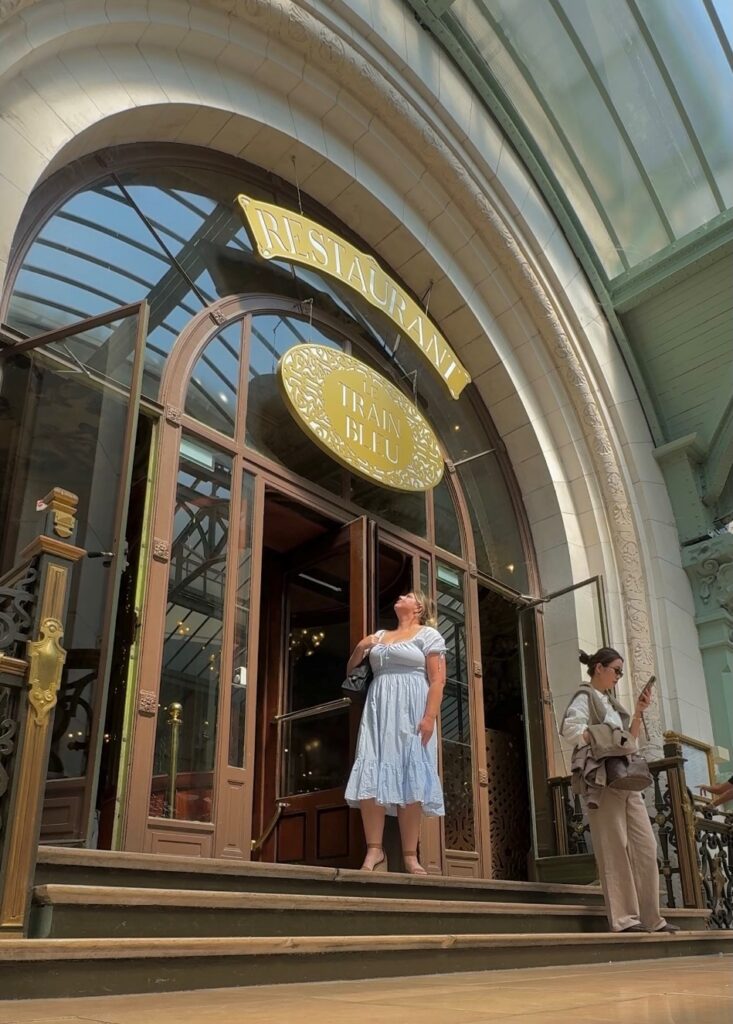
    When most people think about dining in Paris, they picture charming sidewalk cafés or cozy bistros tucked along cobblestone streets. But one of the most breathtaking restaurants in the city is hiding in plain sight—inside Gare de Lyon train station.

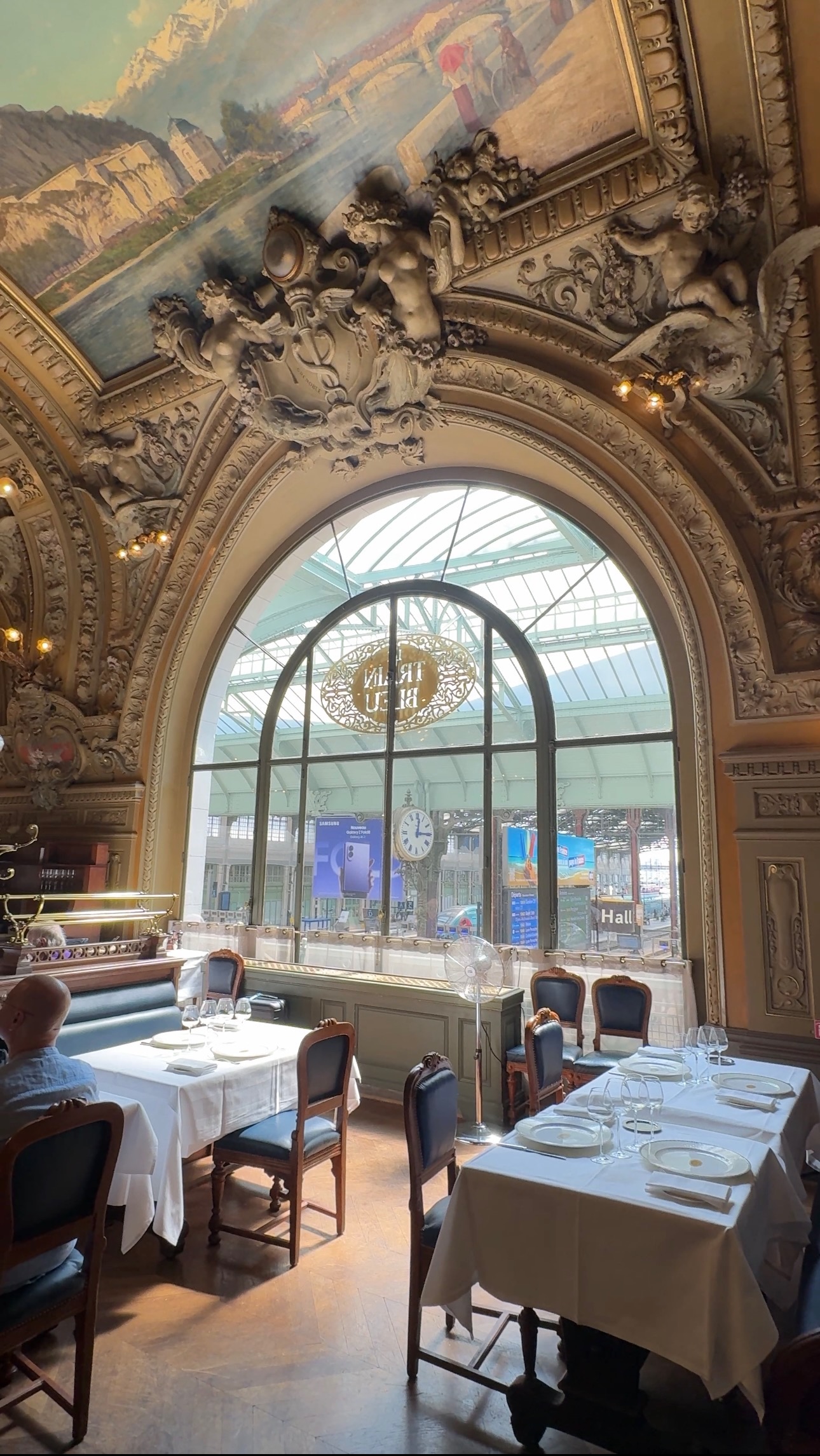
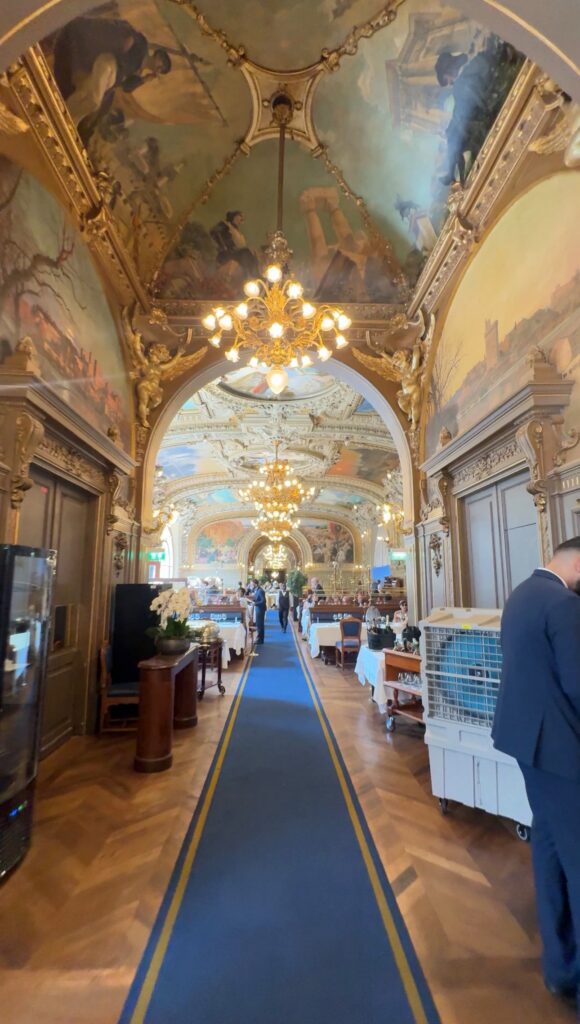
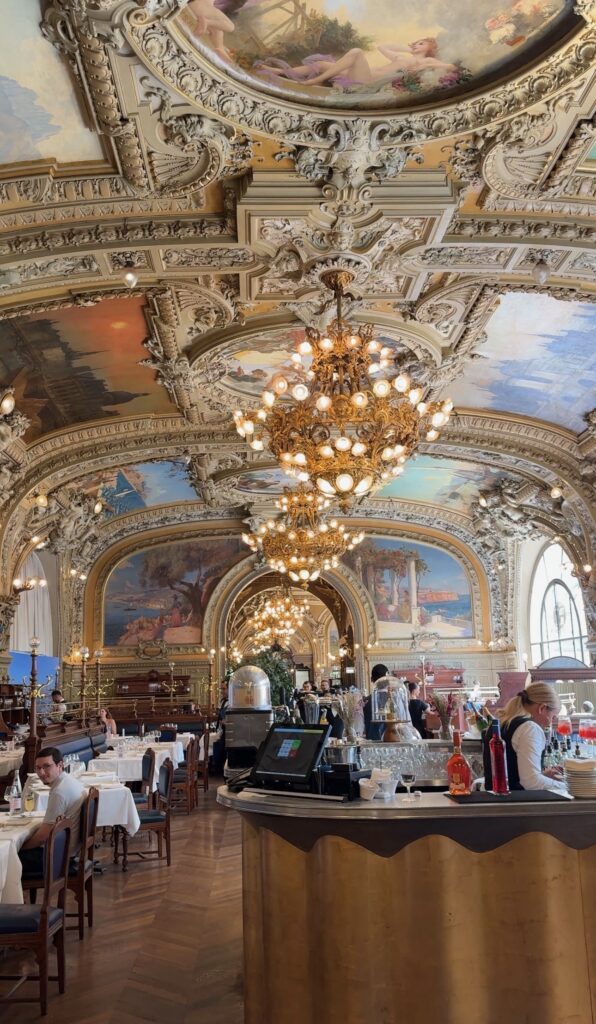
    The moment I stepped through the doors of Le Train Bleu, I completely forgot I was in a train station. Towering painted ceilings, glittering chandeliers, intricate gold leaf, and ornate woodwork surrounded me in every direction. It felt more like walking into a royal palace than a restaurant.

    I found myself looking up far more than I looked at the menu.

    Originally built for the 1900 World’s Fair, Le Train Bleu opened in 1901 as the grand restaurant of Gare de Lyon. It was later named after the famous luxury train that carried travelers from Paris to the French Riviera. Today, the restaurant remains one of Paris’s most spectacular Belle Époque landmarks, with much of its original architecture and artwork beautifully preserved.

    The dining room is truly the star of the experience. Forty-one magnificent paintings decorate the walls and ceilings, each celebrating destinations once served by the Paris-Lyon-Méditerranée railway. Massive crystal chandeliers, gilded moldings, soaring ceilings, and elegant leather seating make every corner feel like a work of art.

    This is one of those rare places where you can’t help but pause every few minutes just to admire another incredible detail.

    My Experience

    From the moment I arrived, I was greeted by a warm and welcoming staff who spoke English with me throughout my entire visit, making the experience feel effortless and comfortable.

    Every detail reflected the restaurant’s commitment to excellence. The tables were dressed in crisp white linen tablecloths, the silverware gleamed, and everything was impeccably clean. At one point during my meal, I noticed a staff member quietly making their way through the dining room, inspecting each table’s wine glasses and polishing away even the slightest fingerprint. It was a small detail, but one that perfectly captured the level of care and pride they take in every guest’s experience.

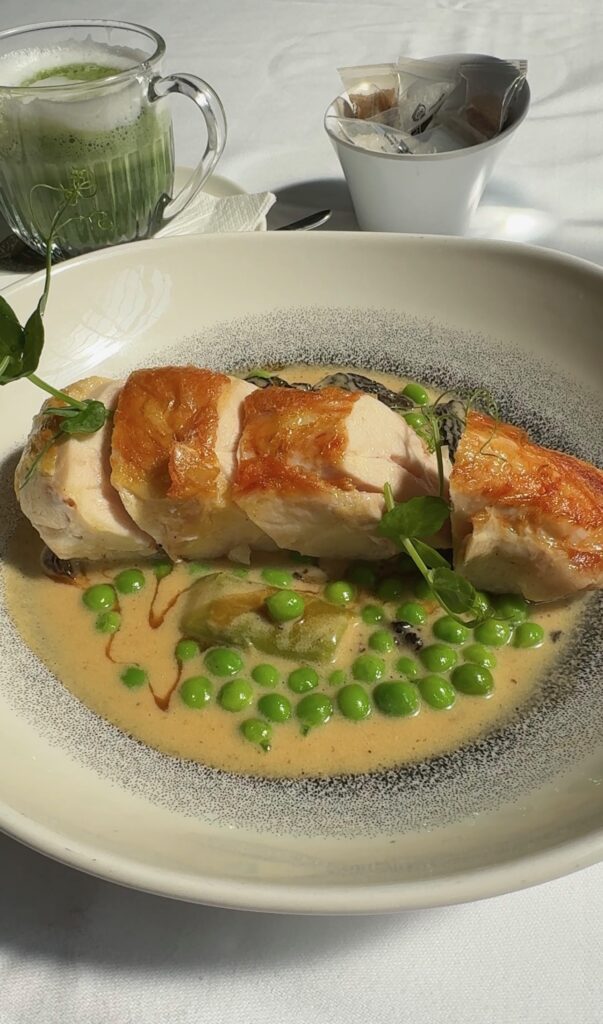
    For my entrée, I ordered the Suprême de volaille fermière rôti, sauce poulette, priced at €42. The meal was served with complimentary French bread and rich, creamy butter, and I also enjoyed a hot matcha and a bottle of water.

    The very first bite stopped me in my tracks.

    I’ve eaten plenty of chicken in my life, but nothing like this. It was unbelievably juicy, tender, and packed with flavor. The poulette sauce was silky and comforting—rich without feeling heavy, with just the right touch of salt to complement the chicken instead of overpowering it. Every bite was even better than the last.

    The service was impeccable from beginning to end, and I always felt genuinely cared for.

    Would I order this dish again?

    Without hesitation. Absolutely.

    Is It Worth It?

    If you’re searching for the cheapest meal in Paris, this probably isn’t it.

    But if you’re looking for a dining experience you’ll remember long after your trip is over, Le Train Bleu absolutely deserves a spot on your itinerary. You’re not just paying for lunch or dinner—you’re dining inside a piece of Parisian history.

    It’s the kind of place that reminds you travel isn’t always about checking attractions off a list. Sometimes it’s about slowing down, looking around, and appreciating the beauty that exists in unexpected places.

    Le Train Bleu was one of those moments for me.

    Quick Take:

    If you’re planning a trip to Paris, don’t overlook this hidden gem inside Gare de Lyon. Whether you stop in for lunch, dinner, or even just dessert, you’ll leave with memories that last far longer than the meal itself

    Forward Always, Shannon

    If this is your first time here, welcome to Forward & Fernweh. Explore more travel stories, destination guides, and honest reviews, or visit my About Page to learn more about the journey behind the blog.
  • Why We Keep Coming Back to Fort Lauderdale Year After Year

    Why We Keep Coming Back to Fort Lauderdale Year After Year

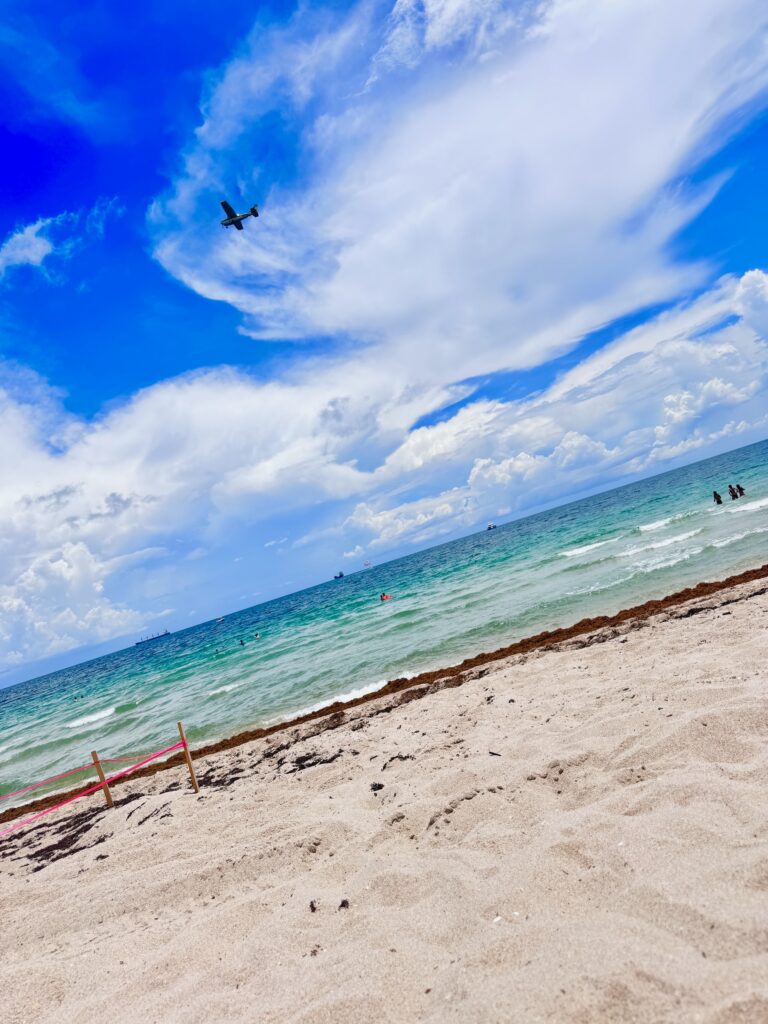
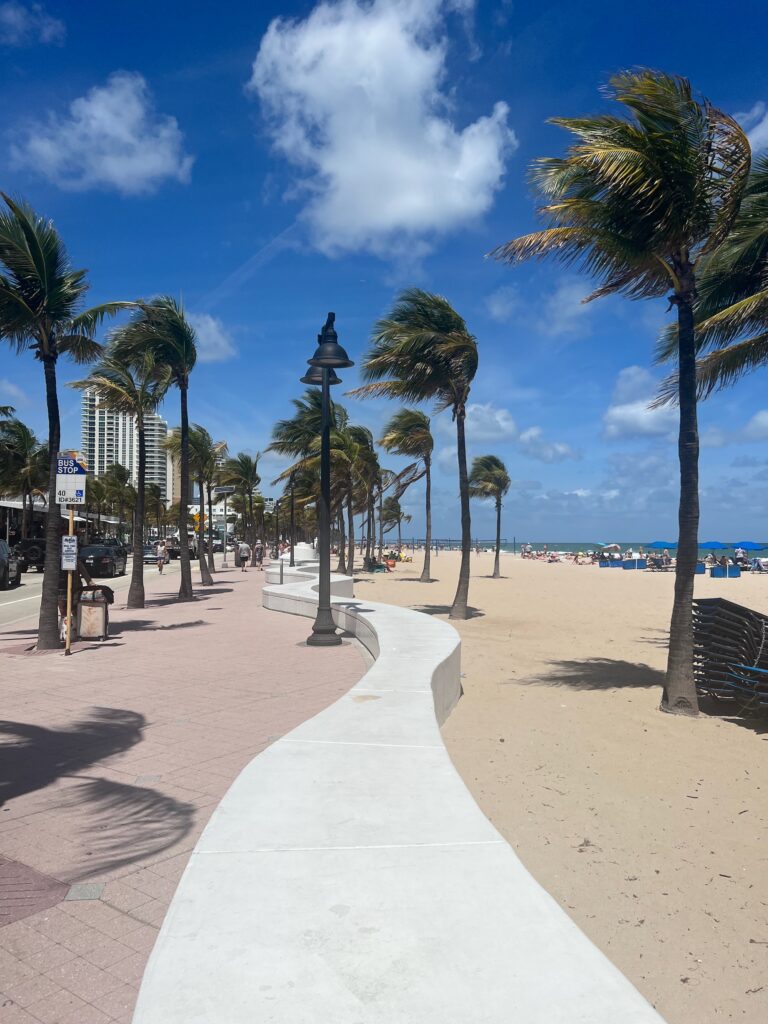
    Fort Lauderdale has become one of our favorite beach getaways. From its laid back vibe, family friendly atmosphere, to amazing restaurants, and beautiful emerald water, it’s a destination we never get tired of visiting.

    There are plenty of beautiful beach destinations in Florida, but we always find ourselves coming back to Fort Lauderdale. With its relaxed pace, family-friendly atmosphere, incredible restaurant scene, and beautiful blue water, it’s become our favorite place to unwind.

    Our love for Fort Lauderdale actually started in 2019 after reconnecting with an old coworker and friend. She invited me down for a weekend, and that one invitation was all it took. From that very first trip, I was hooked on South Florida.

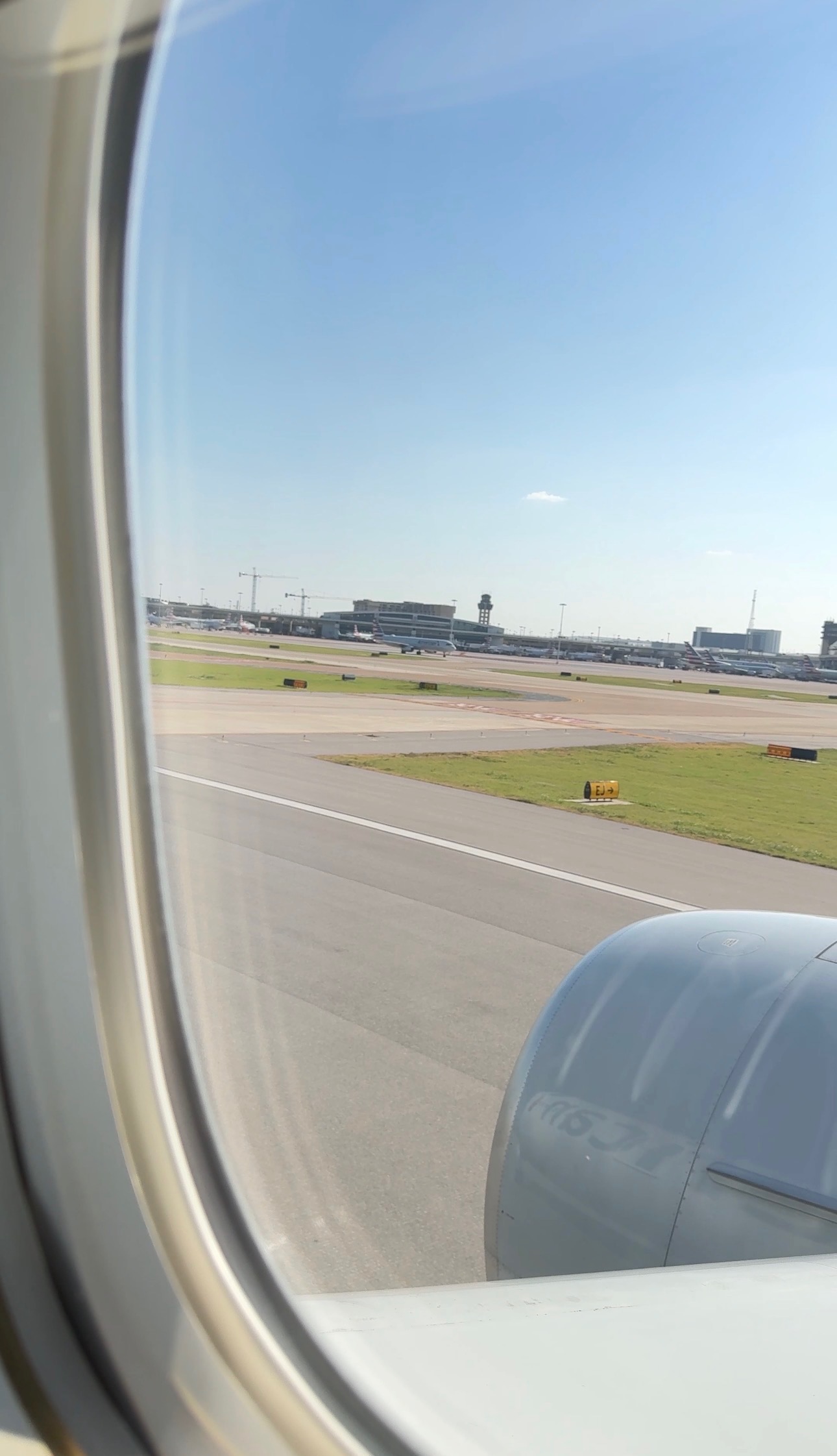
    Every time I step off the plane at Fort Lauderdale-Hollywood International Airport, something changes. The warm Florida sunshine hits my face, and I instantly feel lighter, happier, and full of energy. It’s hard to explain, but it happens every single time.

    Texas has sunshine too, but it feels different. In Texas, the heat can be relentless. In Fort Lauderdale, the sun feels energizing. Maybe it’s the ocean breeze, the salty air, or the sound of the waves rolling onto the beach. Whatever it is, I leave feeling refreshed instead of drained.

    While Miami gets most of the attention, Fort Lauderdale is the city we choose every time. The pace is slower, traffic feels more manageable, and the atmosphere is much more relaxed. It feels welcoming for families without sacrificing great restaurants, beautiful beaches, or plenty of things to do.

    One of our absolute favorite activities is riding the Water Taxi. It’s one of the best values in the city and doubles as a sightseeing cruise. You can spend the day hopping on and off while cruising through Fort Lauderdale’s scenic waterways, then head downtown before catching a ride back later in the evening. They even serve drinks onboard, making the ride just as enjoyable as the destination. I’ll share a complete guide to the Water Taxi in a future post because it deserves one of its own.

    When choosing where to stay, we usually prefer the southern end of Fort Lauderdale Beach near the harbor. It’s within walking distance of several of our favorite restaurants, offers easy access to the Water Taxi, and is just a short trip to Las Olas Boulevard. Everything feels connected, so it’s easy to leave the car parked and simply enjoy the area on foot.

    Florida has no shortage of beautiful beaches, and honestly, you could have a wonderful vacation at many of them. For us, though, the deciding factor is the atmosphere. Fort Lauderdale has the easygoing, laid-back vibe we’re looking for. It’s lively without feeling overwhelming, which keeps us coming back year after year.

    If you’re planning your first visit, I have one recommendation: go in late May if you can. Spring Break is over, schools are still in session, and the beaches are noticeably quieter. It’s the perfect time to experience Fort Lauderdale more like a local and less like a tourist.

    For us, Fort Lauderdale isn’t just another beach destination—it’s the place we look forward to returning to again and again.

    Quick Take: Fort Lauderdale is family friendly, laid back, has excellent dining experiences, and beautiful scenery who would want to go anywhere else? It’s a favorite domestic destination for sure.

    Forward Always, Shannon

    If this is your first time here, welcome to Forward & Fernweh. Explore more travel stories, destination guides, and honest reviews, or visit my About Page to learn more about the journey behind the blog.

  • Is America Airlines Premium Economy Worth the Extra Cost?

    Is America Airlines Premium Economy Worth the Extra Cost?

    When you’re booking a long-haul flight, the temptation to upgrade can be hard to resist- especially on an overnight trip to Europe. Before my flight to Paris, I decided to upgrade to AA Premium Economy to see if the added comfort justified the extra cost. After spending nearly 9 hours in the air, here is my honest experience and whether Id choose it again.

    Why I Decided to Upgrade

    I’m 5’10”, so my height was the biggest reason I decided to upgrade. After I booked my flight, American Airlines sent me an offer through their app to move from economy to Premium Economy for a little over $400. It wasn’t something I had originally planned to do, but for an overnight flight to Paris, I figured I’d give it a try.

    The upgrade also included priority boarding and priority baggage, which was a nice bonus before I even stepped onto the plane.

    First Impressions

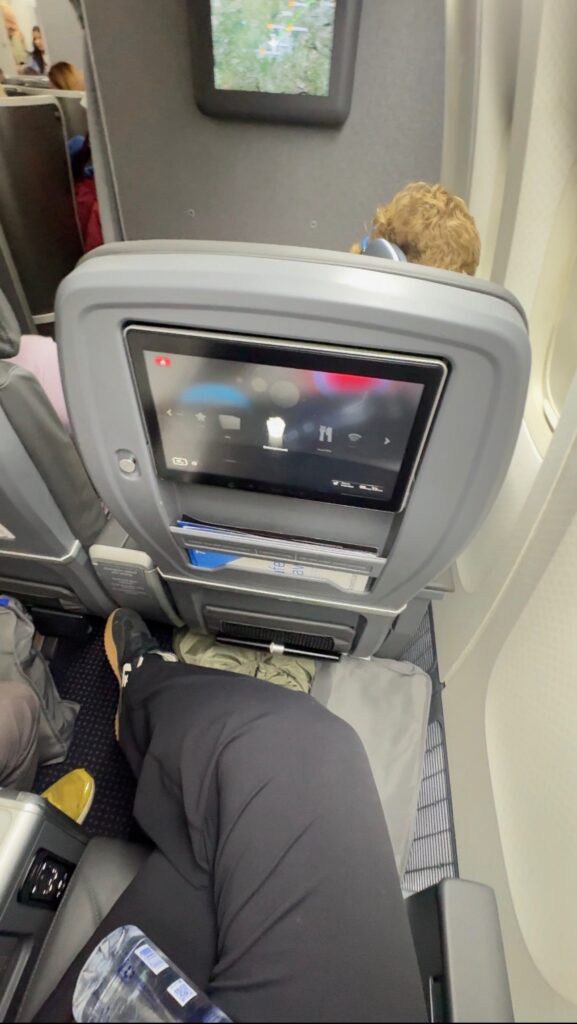
    My seat was in a two-seat row by the window with another passenger in the aisle seat. The first thing I noticed was the extra width. While I don’t spill over into the next seat in economy, I’ve always felt a little cramped when I’m shoulder-to-shoulder with another passenger.

    That feeling completely disappeared in Premium Economy.

    The seat was noticeably more comfortable and reclined much farther than a standard economy seat. It almost had me convinced I might actually fall asleep…almost. 😂 Unless I’m heavily medicated, I simply do not sleep on airplanes, no matter how comfortable the seat is.

    Another pleasant surprise was that when the passenger in front of me reclined, it didn’t affect my comfort at all. I never felt like they were in my personal space.

    The Little Extras

    The footrest ended up being one of those features I didn’t know I’d appreciate until I used it. It was nice to be able to elevate my feet during such a long flight.

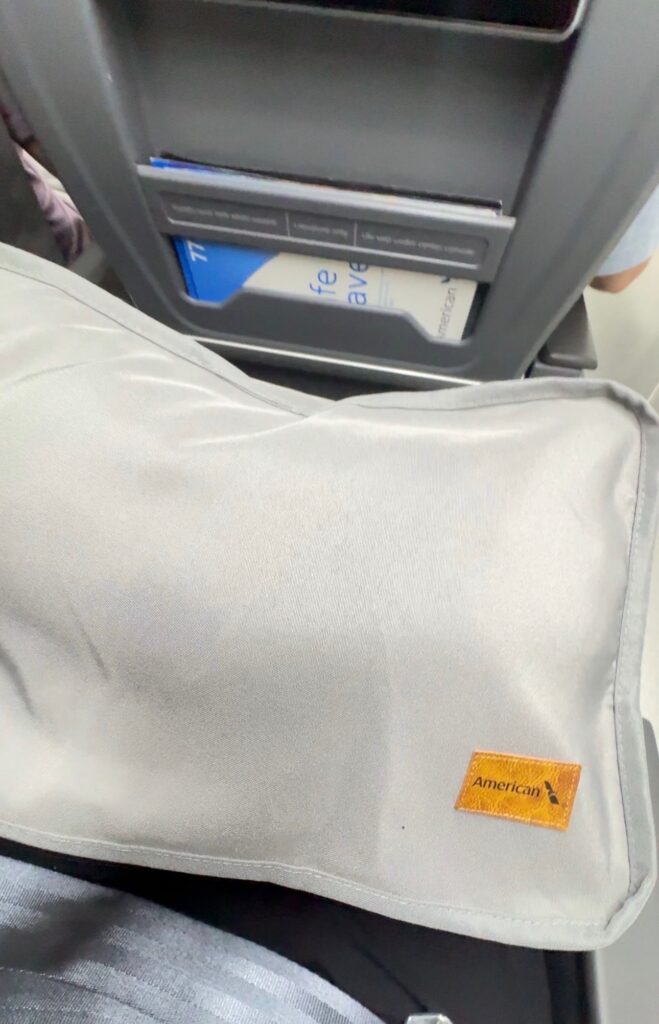
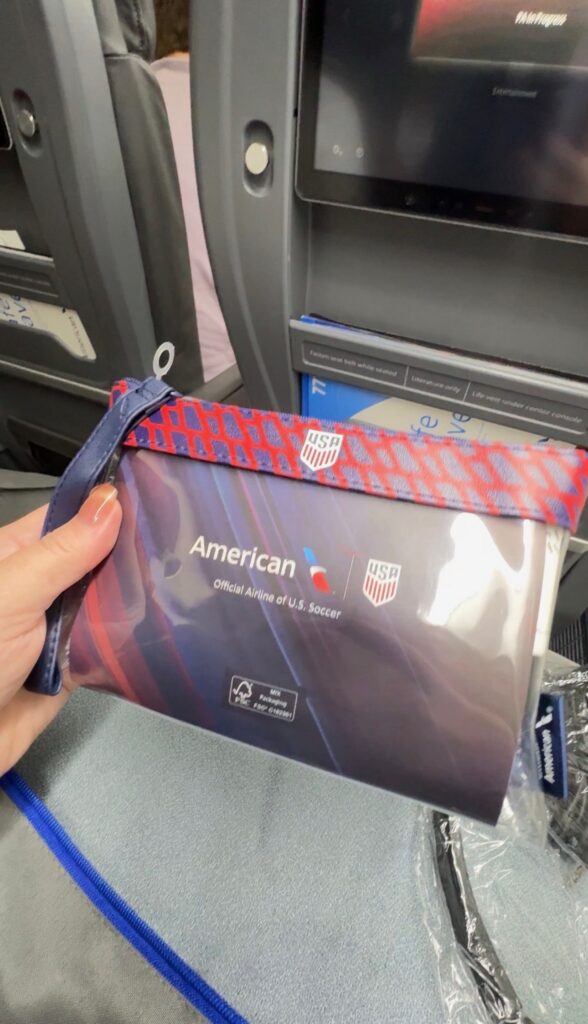
    Waiting at my seat was a welcome kit that included upgraded headphones, a blanket, skincare items, a sleep mask, and a pair of socks. There was also a pillow that was about the size of a family-size box of Cheerios. 😅 It wasn’t luxury-hotel quality, but it definitely beat the tiny pillows I’m used to.

    Service

    Honestly, I didn’t notice much difference in the flight attendants themselves. I think American’s crews do a good job regardless of which cabin you’re sitting in. The biggest difference is simply that they’re taking care of fewer passengers, so service naturally feels a little more attentive.

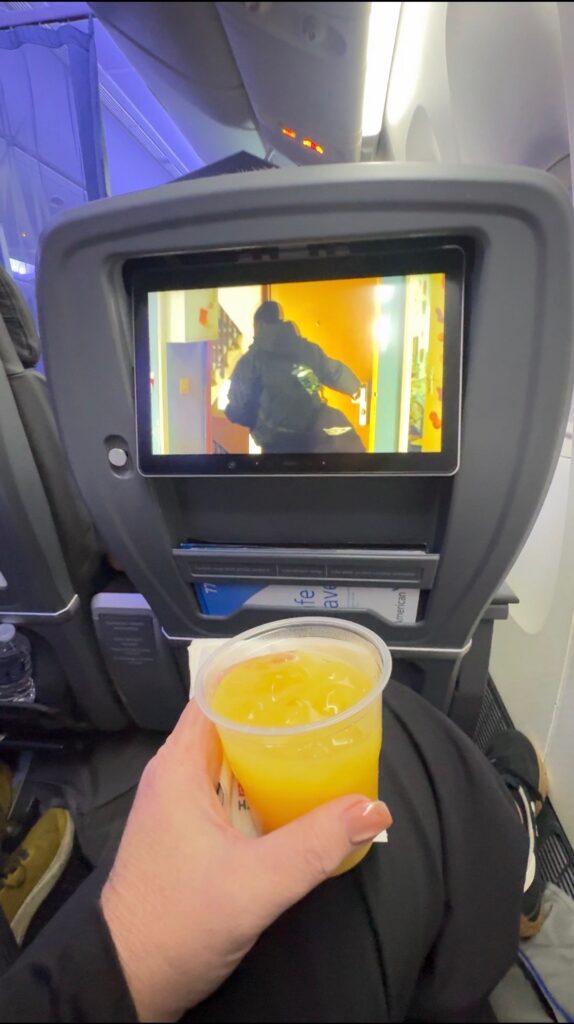
    I did enjoy a couple of screwdrivers during the flight, even though they still weren’t enough to convince me to sleep.

    The Moment That Sold Me

    There was one unexpected moment that really showed me how much additional space Premium Economy gives you.

    At one point during the flight, I got up to use the restroom and somehow managed to drop my phone without realizing it. When I returned to my seat, I couldn’t find it anywhere. I was actually able to bend over, crouch down in the footwell, and reach underneath my seat until I found it.

    There’s absolutely no way I could have done that in a standard economy seat.

    That little incident really put the extra space into perspective.

    Was American Airlines Premium Economy Worth the Extra Cost?

    For me, yes.

    Nothing about the experience disappointed me. Between the wider seat, additional legroom, generous recline, footrest, priority boarding, priority baggage, and simply not feeling packed into the cabin, the upgrade made the journey to Paris much more enjoyable.

    It’s hard not to love the feeling of being toward the front of the plane. It sets the tone for the trip before you even land. Instead of feeling like a sardine packed into a can, I arrived feeling much more relaxed and ready for the adventure ahead.

    If you’re taller, have a larger frame, or simply want to make a long international flight more comfortable without paying business-class prices, I think American Airlines Premium Economy is definitely worth considering.

    As for me? I’d absolutely pay for the upgrade again.

    Quick Take: IMO the upgrade is always worth it, especially with a flight longer than 4 hours.

    Forward Always, Shannon

    If this is your first time here, welcome to Forward & Fernweh. Explore more travel stories, destination guides, and honest reviews, or visit my About Page to learn more about the journey behind the blog.

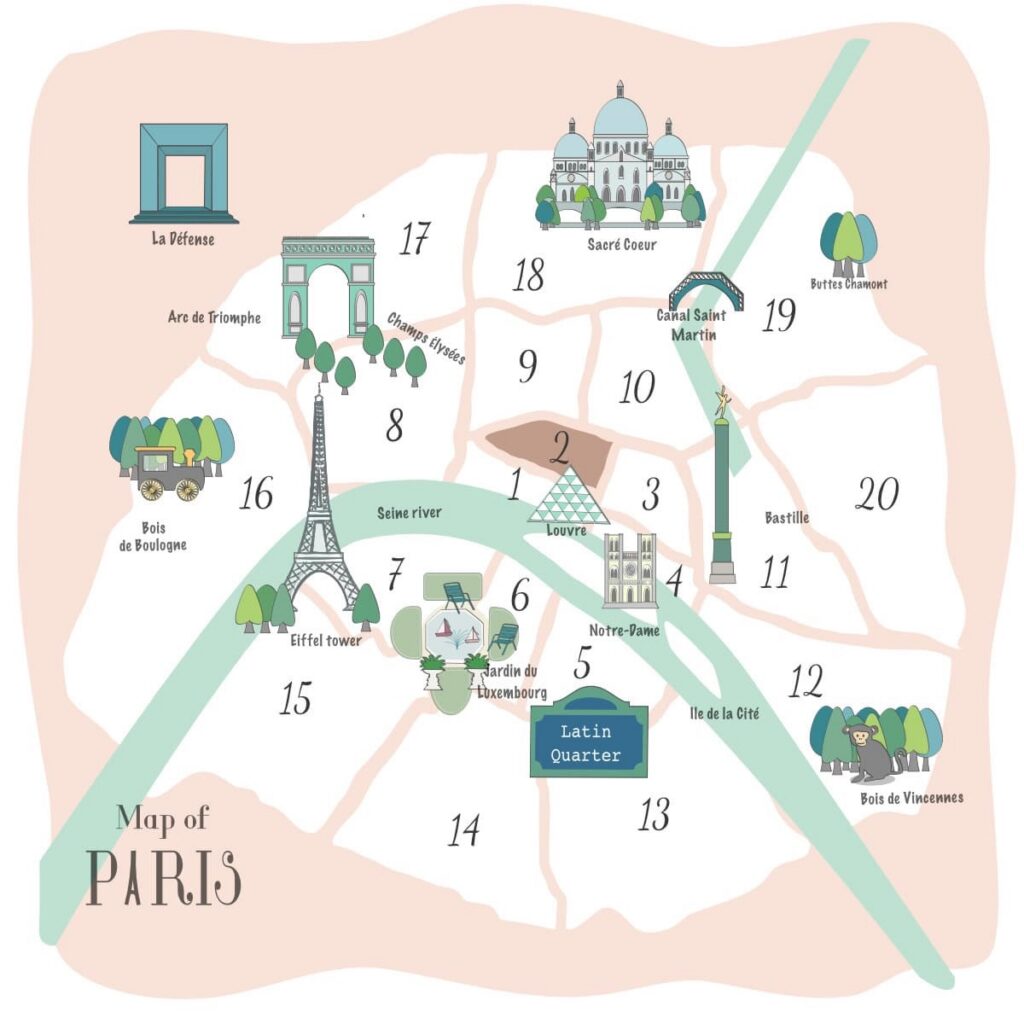
  • Hotel Lautrec Paris Review: An Affordable Stay in the 2nd Arrondissement

    Hotel Lautrec Paris Review: An Affordable Stay in the 2nd Arrondissement

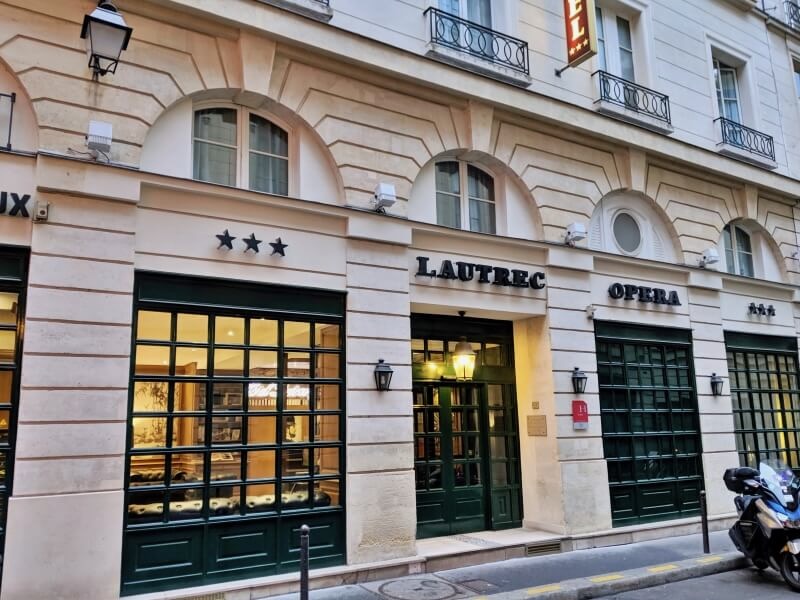
    With Paris experiencing a heatwave, I knew I wanted a hotel with reliable air conditioning. Hotel Lautrec checked that box, but was it worth it staying there? Here’s my honest review.

    First Impressions

    Pulling up to Hotel Lautrec by taxi, the first thing I noticed was how quiet the street was. Unlike some of the busier parts of Paris, this area felt calm and residential. There were two restaurants on the corner, but otherwise the neighborhood was peaceful and surprisingly clean. It immediately felt like a place where I’d be able to relax after long days exploring the city.

    I arrived around 12:30 p.m., fully expecting to leave my luggage and come back later since check-in is usually in the afternoon. Instead, the receptionist greeted me with a warm bonjour and immediately checked me into my room without me even asking. After a nine-hour overnight flight with very little sleep, that small gesture made a huge first impression.

    The lobby itself is compact but bright, with large windows that let in plenty of natural light. It felt welcoming and well cared for from the moment I walked in.

    The Room

    Like many older hotels in Europe, the elevator is tiny. It comfortably fit me, my checked suitcase, my carry-on, and not much else—but I was just grateful not to be hauling luggage up five flights of stairs.

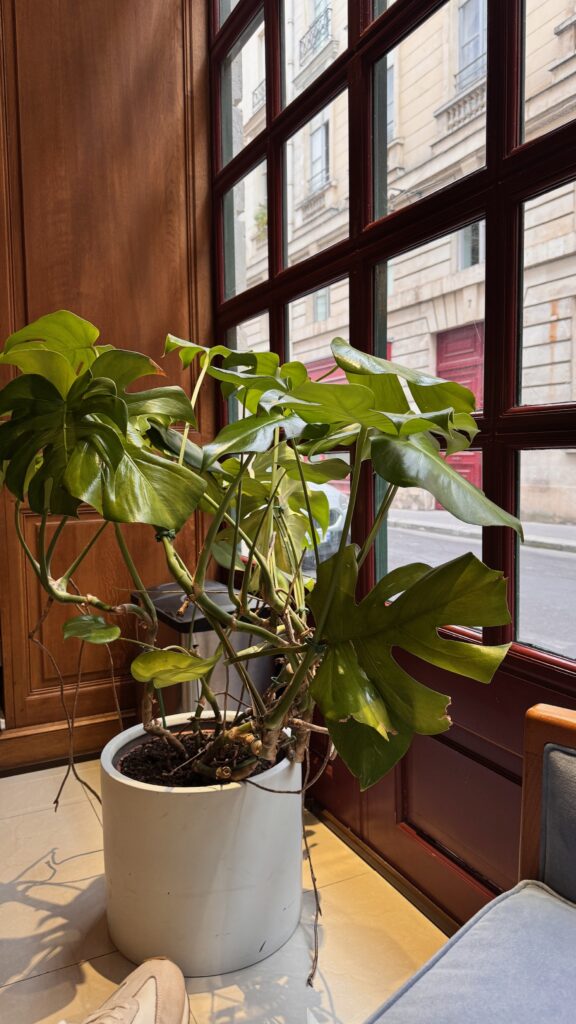
    My room was on the fifth floor, which turned out to be one of my favorite parts of the stay. Opening the window revealed the classic Paris rooftops and balconies of the surrounding buildings. Because so many streets in Paris are narrow and lined with tall buildings, being higher up made the room feel brighter and more open.

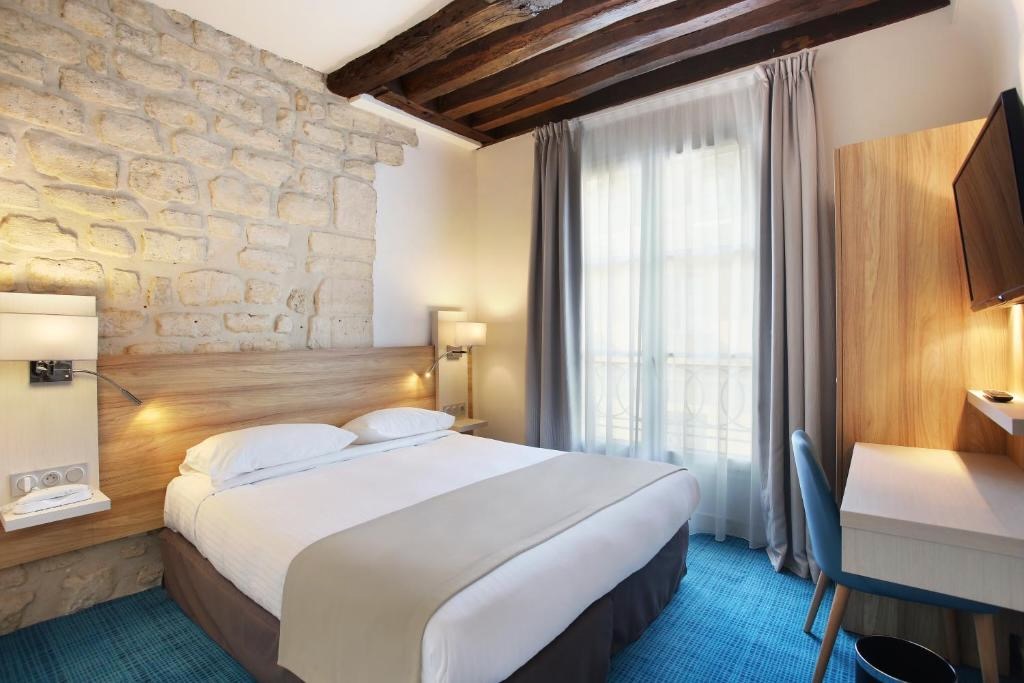
    The room itself isn’t large, but that’s fairly typical for Paris. I was traveling alone and had plenty of space after organizing my luggage. Two people could certainly make it work, but I wouldn’t recommend this room for more than that.

    The instant I opened my door I was hit with that sweet cool atmosphere.

    Ice-cold air conditioning. Just like I keep it in my own home.

    Honestly, it was glorious.

    This was one of the main reasons I booked Hotel Lautrec, and it absolutely delivered. After spending the day exploring in the summer heat, returning to a cool room every evening made a bigger difference than I ever expected.

    The bed was on the firmer side, which I actually prefer, and I found both the pillows and linens exceptionally comfortable. There was also a small desk, chair, wall-mounted television, and wardrobe with enough storage for my belongings.

    The bathroom was compact but very clean. While the shower wasn’t large, the water pressure was excellent and there was always plenty of hot water.

    Location

    One of the biggest reasons I chose Hotel Lautrec was its location.

    It’s within walking distance of Galeries Lafayette, which was perfect because shopping was high on my priority list. I didn’t want to spend the day carrying shopping bags across Paris or taking crowded public transportation afterward. Being able to walk back to the hotel quickly gave me extra peace of mind.

    Palais Garnier is also nearby, and while I didn’t make it there on this trip, it’s certainly within easy reach.

    The Louvre is roughly a 20-minute walk away, although I often chose to use Bolt taxis when visiting attractions farther away. If you’re someone who enjoys walking everywhere or relying exclusively on public transportation, you may prefer staying in a more tourist-heavy neighborhood. Personally, I enjoyed coming back each evening to a quieter part of the city.

    Ironically, I actually felt safer on the hotel’s quiet residential street than I did in some of the busier tourist areas where I had dinner.

    Final Thoughts

    At around €190 per night for a single room when booked separately, I felt Hotel Lautrec offered good value for the money.

    The staff were warm and welcoming, their English was excellent, the neighborhood felt safe, and the air conditioning worked flawlessly.

    Would I stay here again?

    Absolutely.

    In fact, if you asked me whether I’d rather have an Eiffel Tower view or an ice-cold room after walking miles through Paris during a summer heat wave… I’d choose the air conditioning every single time. 😂

    One final note: the hotel also offers breakfast for an additional charge. I chose to skip it because I preferred heading out early each morning to find a neighborhood café where I could enjoy a fresh croissant and coffee instead.

    Simple, comfortable, and well located-this hotel checked the boxes that mattered most for my trip.

    Forward Always,

    Shannon

    As creator of Forward & Fernweh I dreamed of seeing more of the world. I kept finding reasons to wait. This blog is where I share my honest travel experiences, practical tips, and the moments that gave me the confidence to keep exploring.

  • I Paid $340 for an Airport Concierge at CDG- Was It Worth It?

    I Paid $340 for an Airport Concierge at CDG- Was It Worth It?

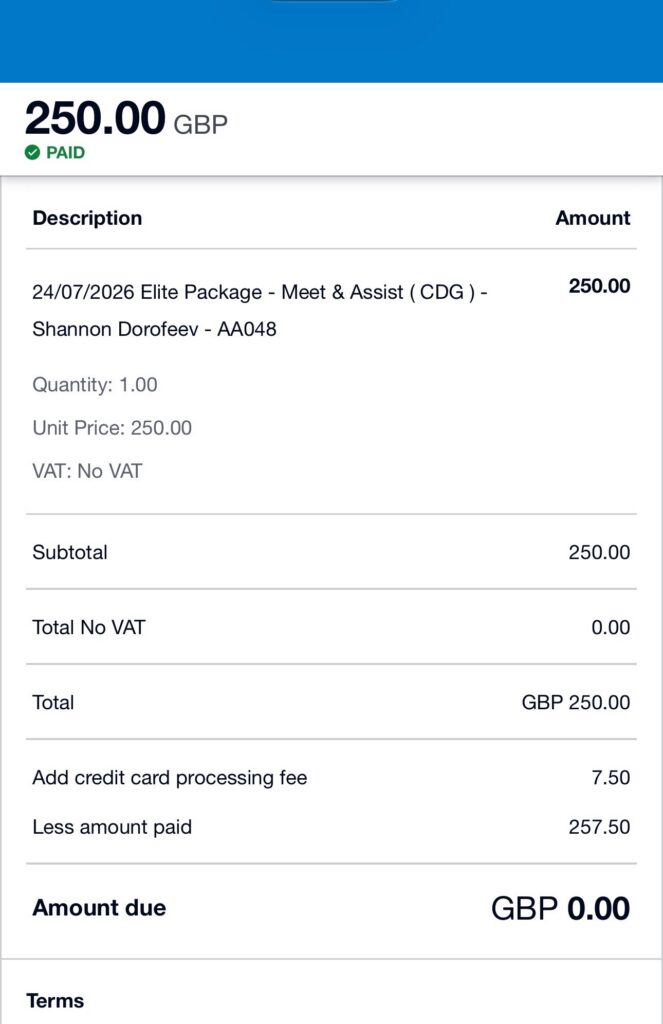
    Paris Charles de Gaulle Airport (CDG) has a reputation for long lines, confusing terminals, and stressful connections. Before my flight, I decided to see if a private airport concierge service-priced at £250 (about $340 USD)- could make the experience easier.

    As the departure date for my first solo international trip got closer, I started to feel a little uneasy.

    I had been through Paris Charles de Gaulle Airport (CDG) once before during a layover on the way to my husband’s home country. That experience was confusing, stressful, and rushed. We found ourselves lost while trying to transfer terminals and nearly missed our connecting flight.

    This time, I was arriving in Paris completely on my own, and I wanted to avoid that same feeling. I wanted the start of my trip to be smooth, efficient, and as stress-free as possible.

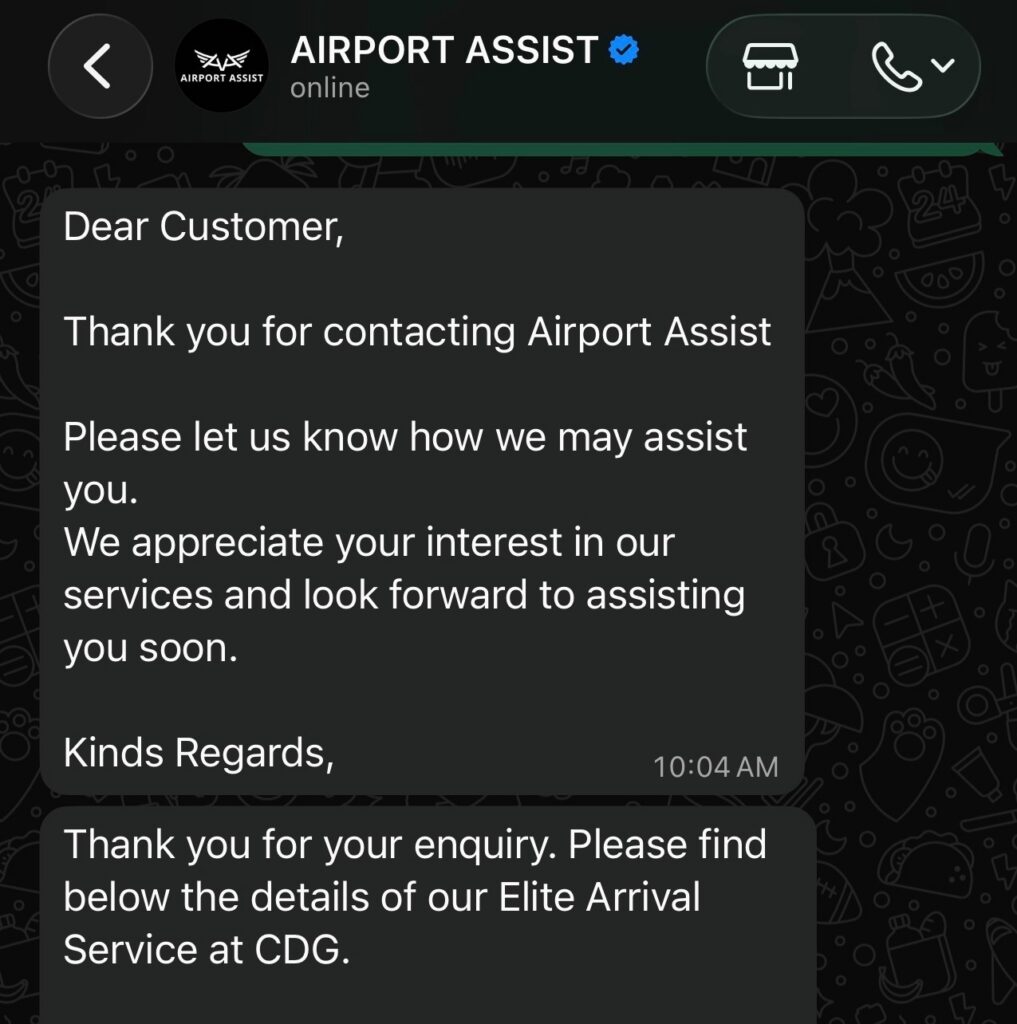
    While scrolling TikTok one evening, I came across a creator talking about her experience using (view link ->) Airport Assist. My curiosity was immediately piqued. I browsed the company’s website, read through the available services, and finally decided to reach out through WhatsApp.

    To my surprise, I received a response almost immediately.

    The representative asked a few questions about my incoming flight and which level of concierge service I was interested in. Once we settled on the package, they emailed me an invoice and explained that I had 48 hours to complete payment.

    I’ll be honest—I almost let those 48 hours expire.

    I kept asking myself, “Am I really about to spend £250 (about $340 USD) just to get through an airport?”

    Then, while doom-scrolling TikTok again, I started seeing videos of travelers standing in incredibly long Entry/Exit System (EES) lines across Europe. That was enough to convince me. I paid the invoice and received my confirmation.

    Still… I wasn’t completely convinced it was legitimate.

    As my plane pulled up to the gate at CDG and passengers began standing to gather their belongings, my stomach started doing little flips. What if I’d just been scammed out of $340?

    I grabbed my carry-on, stepped off the aircraft, and immediately spotted a smiling woman holding a whiteboard with my name written across it.

    Whew. 😅

    She greeted me warmly in English and immediately took my carry-on and personal item. I’ll admit, I felt a little guilty. She was tiny, and I’m pretty sure I’m at least twice her size! I told her she didn’t have to carry everything, but she smiled and insisted.

    “This is what you paid for,” she said.

    From that point on, I simply followed her.

    She confidently guided me through the airport, bypassing every queue we encountered. We made our way to baggage claim, where I described my checked suitcase. She stood at the carousel, spotted it before I did, lifted the heavy bag herself, and continued carrying my other luggage as well.

    I honestly didn’t lift a single bag after stepping off the plane.

    From baggage claim, she escorted me directly to the taxi stand. There was a long queue waiting for taxis, but once again we bypassed the line completely.

    The best part?

    I never had to speak to anyone.

    She handled everything.

    She spoke with the taxi coordinator, had a cab pulled forward, gave the driver my hotel’s address, handed over my luggage, and made sure everything was taken care of before opening the taxi door for me.

    She wished me a wonderful stay in Paris, thanked me, gently closed the door, and waved goodbye as I pulled away.

    It may sound like a small thing, but that experience completely changed the way my trip began.

    Instead of feeling overwhelmed, anxious, or worried about getting lost, I felt calm.

    I never had to think about where I was going, which line I belonged in, how to find baggage claim, where the taxi stand was, or whether I was heading in the right direction. I simply followed someone who knew exactly where to go.

    That’s the real value of an airport concierge service.

    It’s not just about skipping lines.

    It’s about removing the mental load that comes with arriving in a busy international airport.

    Would I recommend it for everyone?

    Probably not.

    But if you’re traveling solo, don’t travel internationally very often, are arriving after a long-haul flight, or simply want your vacation to begin the moment you step off the plane, I genuinely think it’s worth considering.

    For me, it transformed what could have been one of the most stressful parts of my trip into one of the easiest.

    Would I spend £250 ($340 USD) again?

    Without hesitation.

    Rating: ⭐⭐⭐⭐⭐

    Booking Airport Assist took much of the uncertainty out of navigating one of Europe’s busiest airports and made arriving in Paris feel far less stressful. Whether it’s worth the cost depends on your budget and travel style- but if you’re anxious about CDG or have flight connections, it maybe money well spent.

    Forward Always,

    Shannon

    Hi, im Shannon, creator of Forward & Fernweh. I share honest travel experiences, destination guides, and practical tips to help you travel with more confidence and fewer surprises. Learn more on my About page.

  • Is a Guided Tour of Saint-Ouen Market Worth it?

    Is a Guided Tour of Saint-Ouen Market Worth it?

    If you’ve ever wondered whether hiring a guide for the world’s largest flea market is worth the cost, here’s my honest experience.

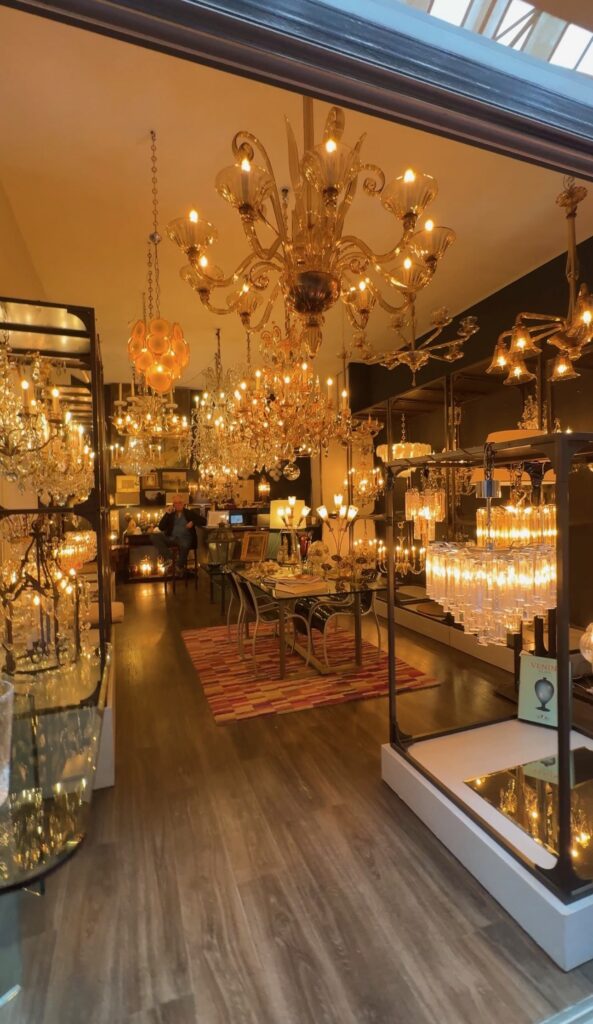
    The Saint-Ouen Flea Market is one of Paris’s most iconic destination and must-visit for anyone who loves antiques, vintage finds, and unique treasures. Before my visit, I booked a guided tour to help me navigate the massive space. Here’s my honest review- and whether I think it’s worth the cost.

    As a solo traveler visiting France without speaking French, I was excited- but also a little intimidated. I had an itinerary I wanted to stick to, and I also knew Id regret skipping the Saint-Ouen Market. Since it’s outside the city center, I worried that communicating would be even more challenging. So I turned to TikTok. Believe it or not, that’s where I found exactly what I was looking for. A creator shared his experience on a guided Airbnb tour of the market, and after hearing his recommendation, I decided to book (view here ->) Mariana’s Airbnb experience.

    After booking the tour through Airbnb for around $125 USD, my guide, Mariana, reached out almost immediately. Her message was warm, detailed, and reassuring. She included the exact meeting location near the closest metro station, our meeting time, and a few recommendations to make the day more enjoyable: wear comfortable walking shoes, bring water, and carry cash in euros. Looking back, all of her suggestions proved helpful.

    Although the meeting point was easily accessible by metro, I decided to take a taxi from the city center. The ride took about 20 minutes and was simple enough for anyone unfamiliar with Paris.

    There were only four people in our group, something Mariana intentionally does to create a more personal experience. Before we even entered the market, she asked each of us what types of items we hoped to find. Whether you were searching for vintage fashion, antiques, artwork, or unique collectibles, she wanted to tailor the experience to our individual interests.

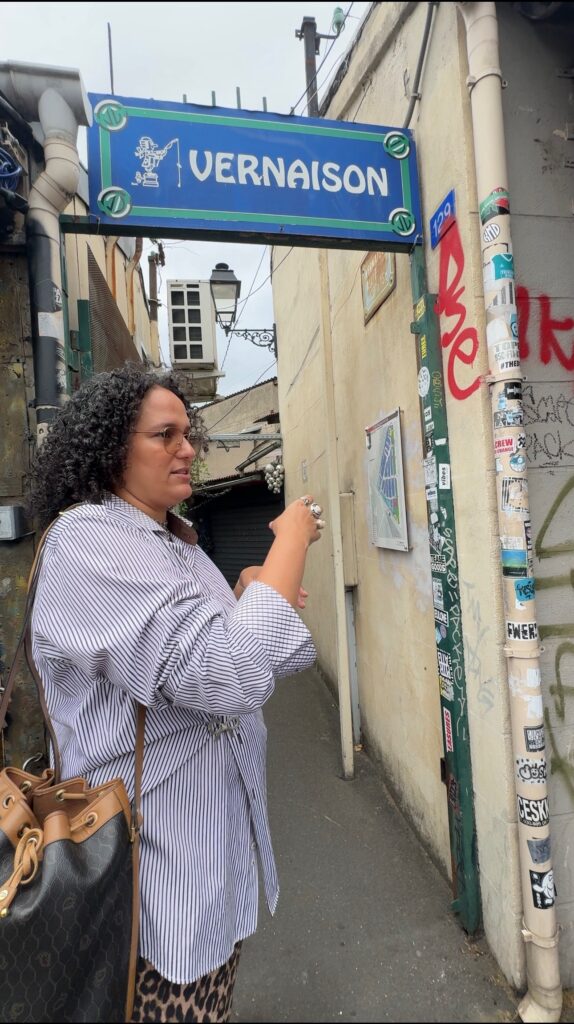
    Main market entrance

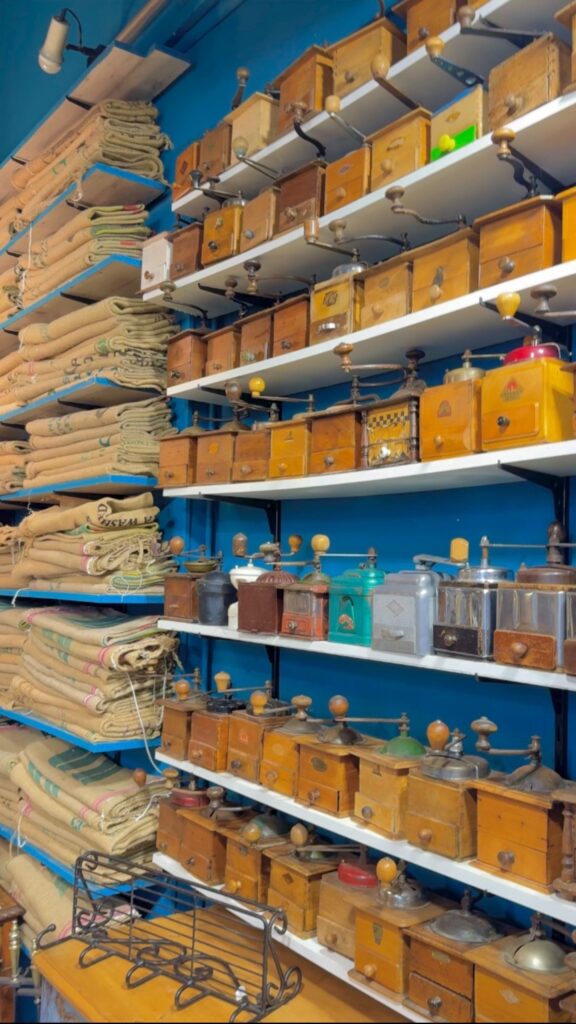
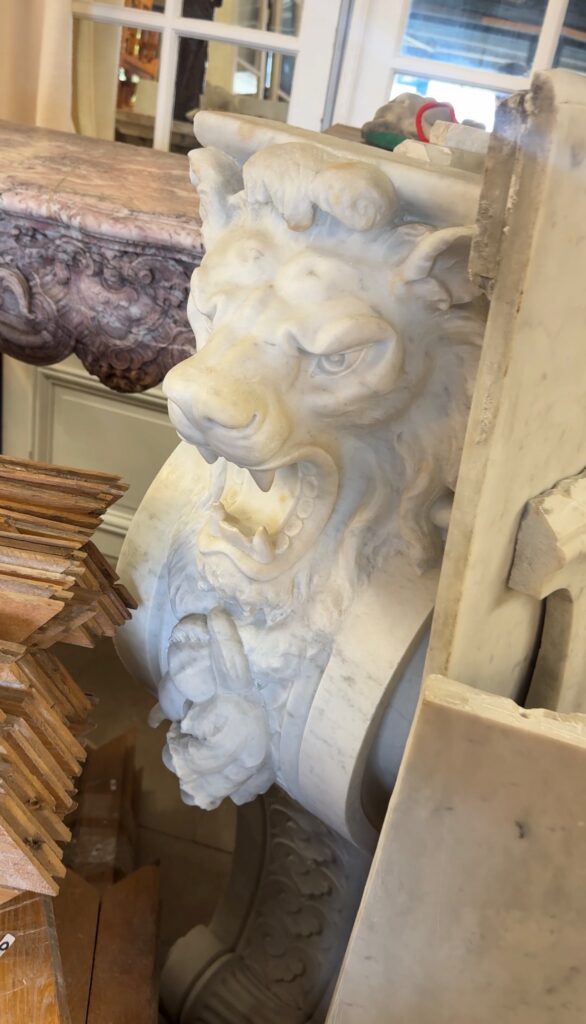
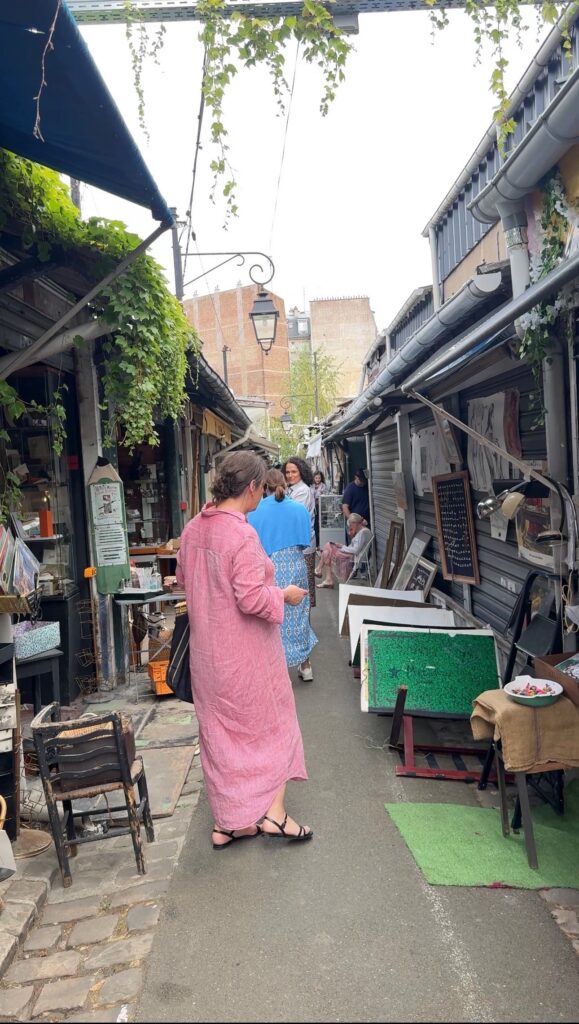
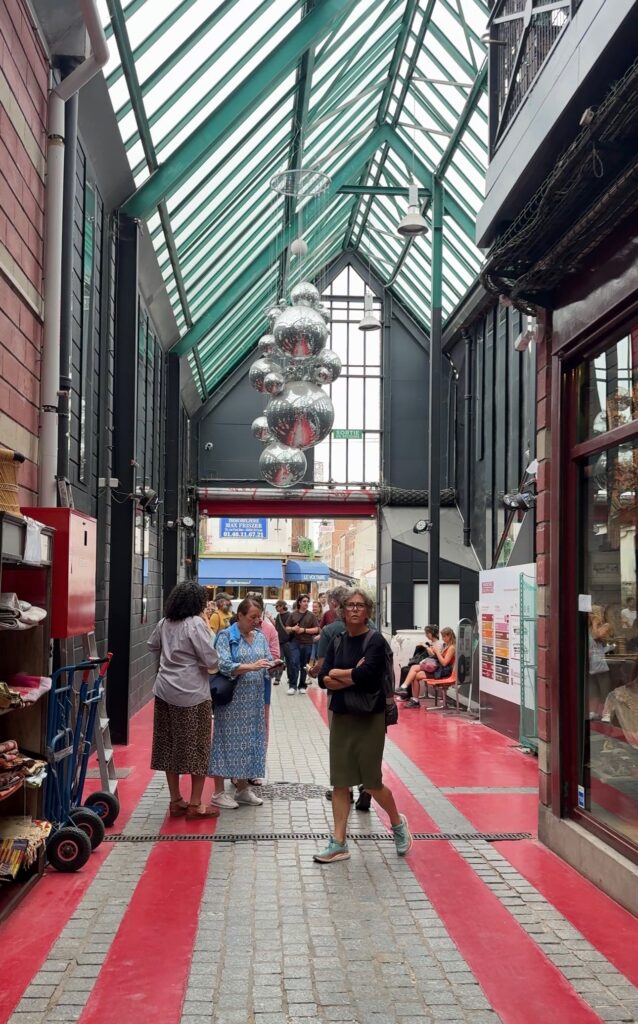
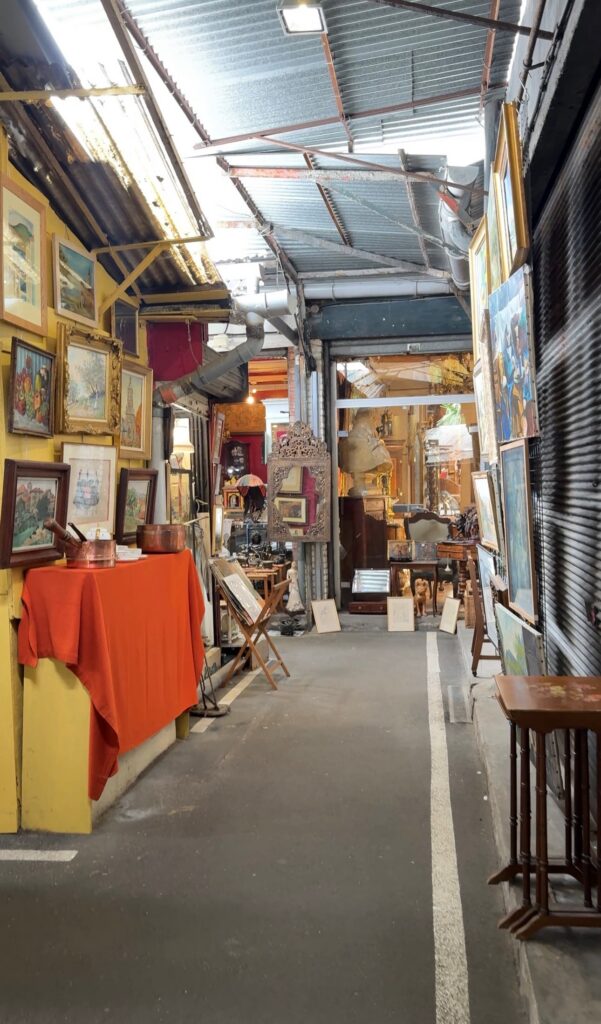
    Before entering the market, Mariana shared a brief history of Saint-Ouen. I had no idea just how massive it really was. With more than 2,000 vendors spread across multiple sections, it’s less of a flea market and more like a small city dedicated to antiques and vintage treasures.

    Once inside, we wandered through narrow alleyways lined with shop after shop. Mariana never rushed us. If something caught our attention, she happily stopped so we could browse. One of the biggest advantages of having a guide was her relationship with many of the vendors. She translated conversations, asked questions about the history of different pieces, discussed pricing, and even negotiated when appropriate. It made the experience feel much more immersive than simply walking through on our own.

    The tour lasted about three hours, but that’s only enough time to experience the highlights. Honestly, you could spend an entire day exploring Saint-Ouen and still not see everything. Mariana did an excellent job introducing us to the market’s different sections and helping us understand how everything was laid out, making the enormous space feel much less overwhelming.

    Overall, Mariana was an excellent guide. She was knowledgeable, friendly, and clearly well known by many of the vendors, who greeted her warmly throughout the morning. It was obvious that she had built genuine relationships within the market, and those connections enhanced the experience for everyone in our group.

    Screenshot

    The only small downside had nothing to do with Mariana herself. The other three guests were traveling together, while I was exploring solo. Naturally, we spent a little more time browsing the types of shops that interested the larger group. Mariana did a great job balancing everyone’s interests and keeping us moving, but it’s something solo travelers should keep in mind.

    Another thing worth mentioning is the neighborhood surrounding the meeting point. Since Saint-Ouen sits outside the main tourist areas of Paris, the atmosphere feels different. You’ll notice more graffiti, older buildings, and fewer tourists. While I was waiting for the group to arrive, I was definitely more aware of my surroundings than I had been in central Paris. That said, I never felt unsafe or threatened at any point during the tour.

    My Honest Opinion

    Would I recommend this tour? Absolutely.

    Would I personally book it again? Probably not—but only because the tour gave me exactly what I needed: confidence.

    By the halfway point, I realized that many of the vendors spoke enough English for basic conversations, and I no longer felt intimidated by the size of the market. Mariana taught me how the different sections were organized and helped me understand how to navigate them. If I return to Saint-Ouen in the future, I’d feel completely comfortable exploring on my own.

    If you’re visiting the market for the first time, especially as a solo traveler or if you’re feeling intimidated by its size, I think this tour is money well spent. If you’re already a confident traveler who enjoys wandering and discovering places independently, you may find that you don’t need a guide. Either way, don’t skip Saint-Ouen. It was one of the highlights of my trip to Paris.

    Quick take: If it’s your first visit to Saint-Ouen and you’re feeling unsure, id recommend booking Marianas tour. If you’re confident traveler who enjoys exploring independently, you’ll likely be comfortable visiting on your own after a little research.

    Forward always, Shannon

    If this is your first time here, welcome to Forward & Fernweh. Explore more travel stories, destination guides, and honest reviews, or visit my ABOUT PAGE to learn more about the journey behind the blog.
    Disclosure: This is not a sponsored review and I receive no compensation for sharing my experience. All opinions are my own.